Variable lithology including calcite marble, calcite-dolomite marble and dolomite marble.
Aesthetics
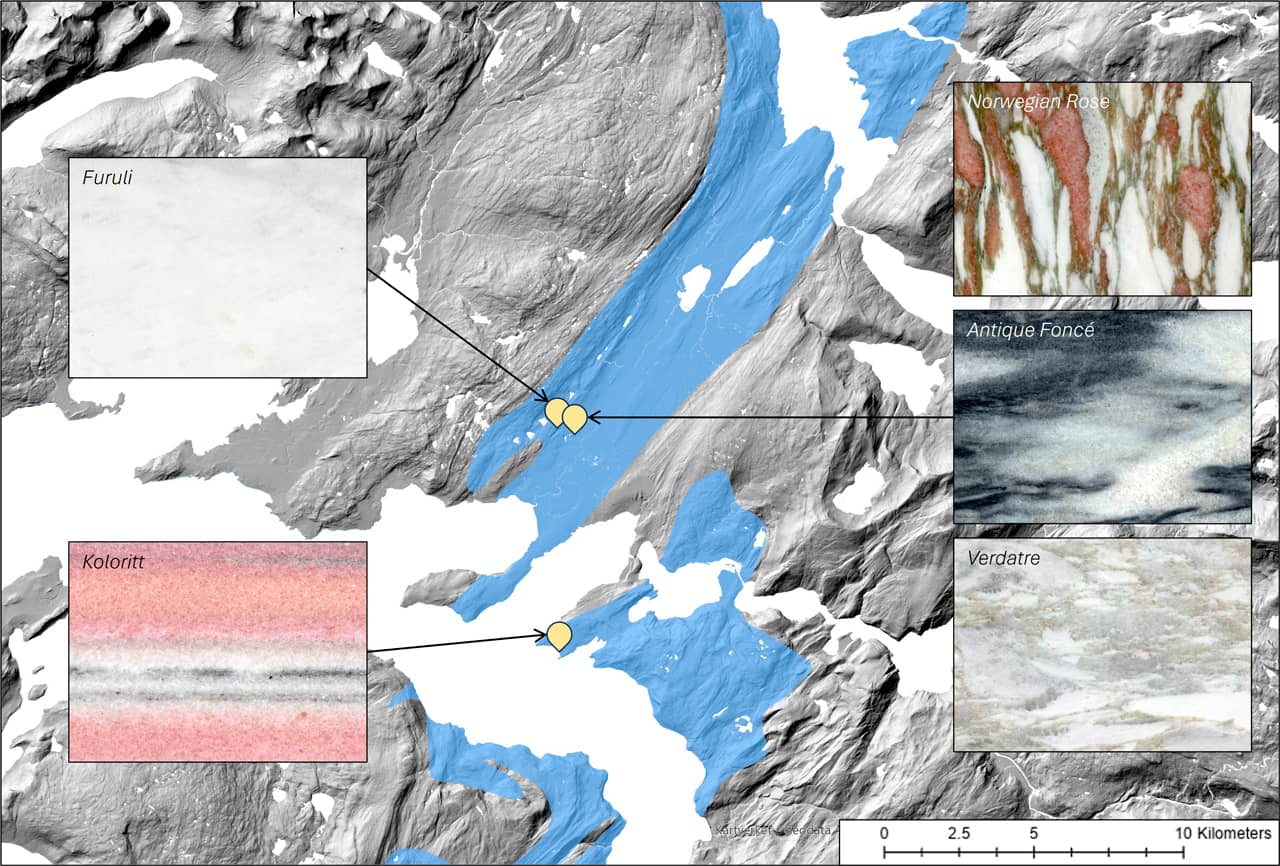
Layers of coloured marbles, ranging from pure white (Furuli), to grey (Antique Foncé), pink (Norwegian Rose), green (Verdatre) and banded pink and white (Koloritt).
Geological settings
Early Cambrian – Fauske Nappe – Fauske Group – Rognan Formation.
Location
Fauske, Nordland county, North Norway.
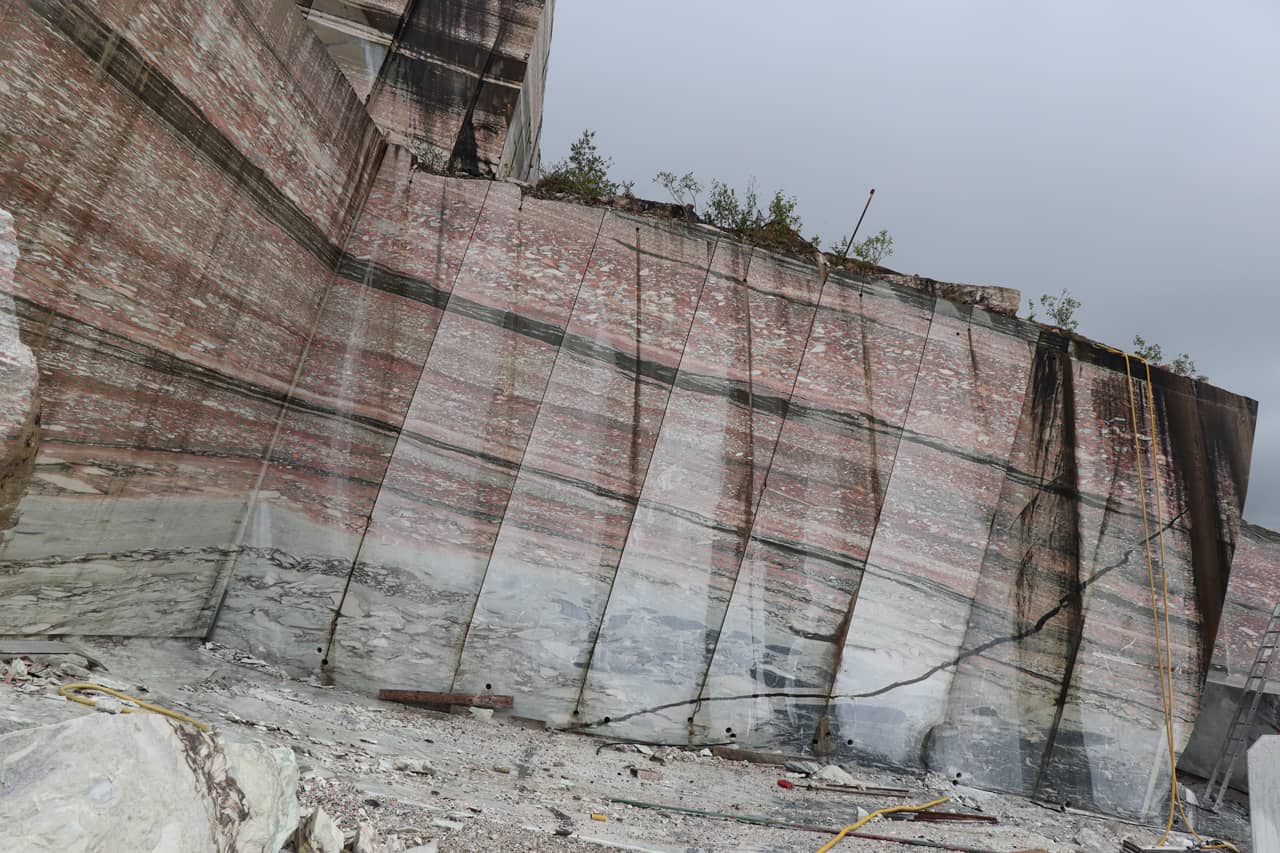
Main Fauske marble quarry.
Fauske Marble.
Quarrying of the marble started in 1882. The quarrying and sales grew quickly to industrial scale, including significant export already in the 1890’s. Belgian steam-driven wire saws were applied in quarrying from the early 1890’s, of which traces in old quarry sites are remarkably well preserved and of high cultural heritage value. At first, raw blocks were shipped to SE Norway and later Copenhagen, but in 1910 a marble processing factory was opened at Fauske. Since then, the “Ankerske Marmorforretning” became a well-known trademark in Norway and abroad. In architecture, the Fauske marble gained an exclusive role since the beginning. In particular, it has been an important stone in the late 19th century and early 20th century Art Nouveau architecture in central Europe. Most of the projects engaging the Fauske marble made use of several of the subtypes of marble, creating what is clearly recognisable as the Fauske palette of colours. The most exclusive project made from the Fauske Marble is likely the sarcophagus of King Haakon VII, whilst the largest yet is the floor of the Oslo Airport Gardermoen, approximately 25 000 sqm. The most significant building is the Stoclet Palace in Brussels, which gained world heritage status in 2009.
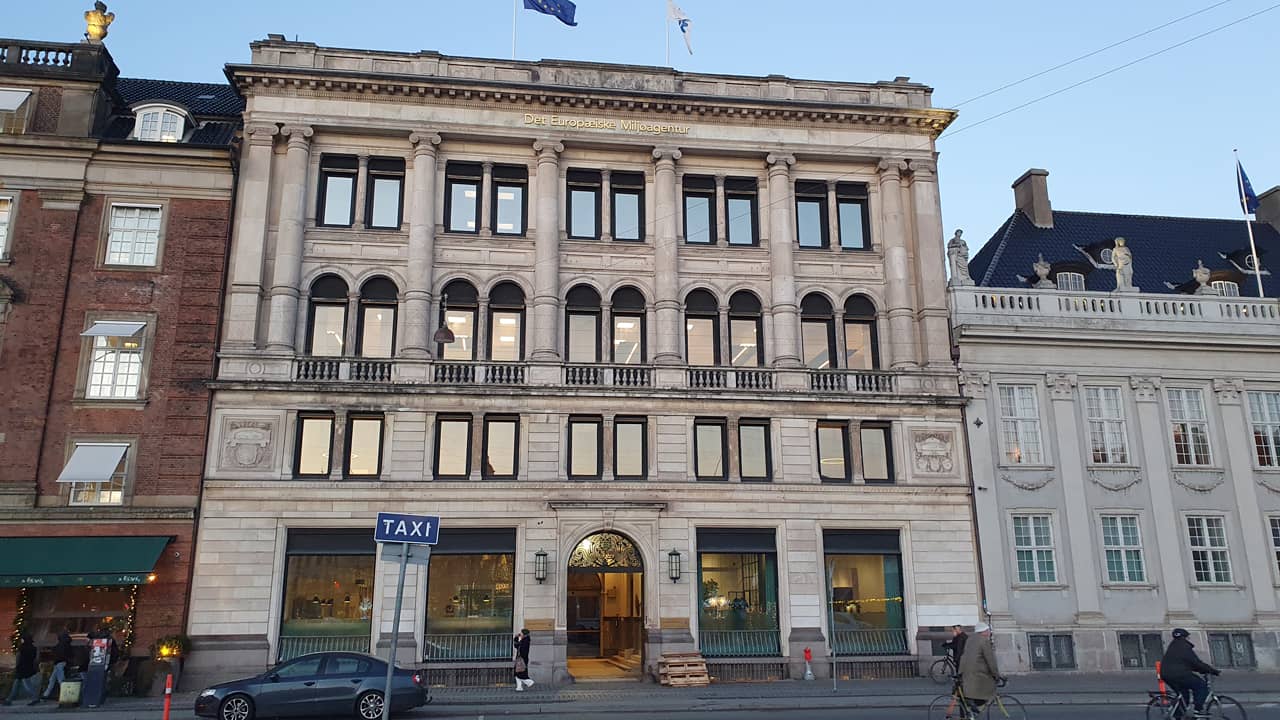
Fauske marble facade, Standard Life Insurance, Copenhagen, 1895.
Map of geological formation and distribution of marble types.
Main publication
Melezhik, V. A., Heldal, T., Roberts, D., Gorokhov, I. M. & Fallick, A. E. (2000) Depositional environment and apparent age of the Fauske carbonate conglomerate, North Norwegian Caledonides, NGU Bulletin 436, 147-168, https://hdl.handle.net/11250/2674210.