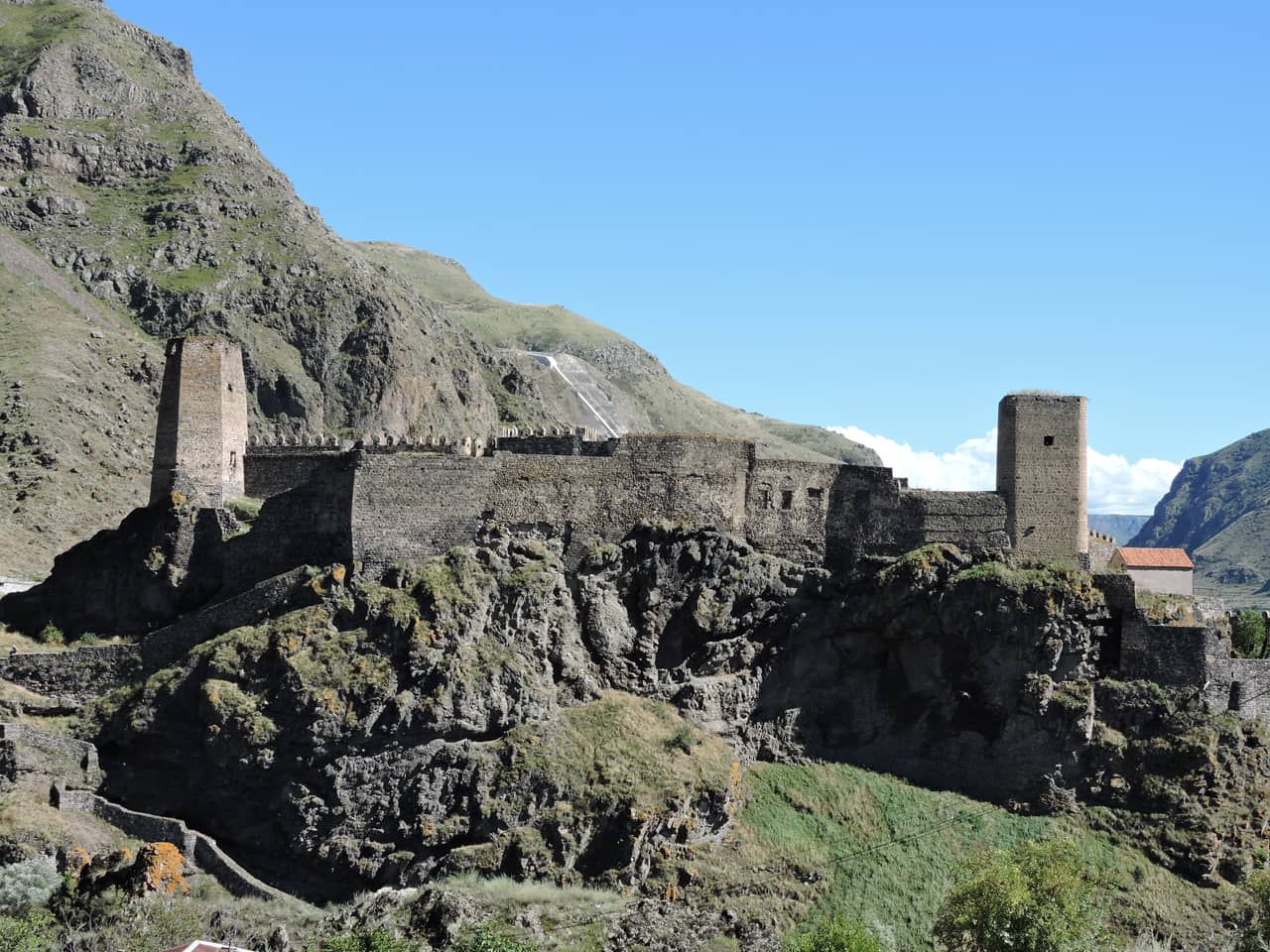
Part of the megalithic fortress near Archangel of Saros.
Local native name
Javakheti Basalt
Year designation
2026
Lithology
Basalt.
Aesthetics
Javakheti Basalt occurs in shades of grey to black and rarely in buff yellow. Based on the nature of the gas vesicles the lavas can be classified into vesicular basalt (when vesicles are empty), amygdaloidal (where vesicles are filled by secondary minerals like zeolites, calcite, agates, etc.) and massive basalt (devoid of vesicles/few vesicles). The Javakheti basalts are texturally diverse showing a porphyritic texture in a holocrystalline groundmass to an aphyric-trachytic texture. Plagioclase is the most common phenocryst, but basalts with two phenocrysts (plagioclase and olivine) are present too.
Geological settings
Javakheti Volcanic Highlands or Javakheti Volcanic Province is part of the South Caucasus continental flood basalt province. The sequence of volcanics erupted from Neogene to Quaternary, most of which erupted during the Pliocene epoch.
Location
The basalts are exposed in the Javakheti Highland in the Lesser Caucasus, and span across southern Georgia, central and northern Armenia, and northeastern Turkey.
Part of the megalithic fortress near Archangel of Saros.
Javakheti Basalt – an iconic stone from the Lesser Caucasus Mountains.
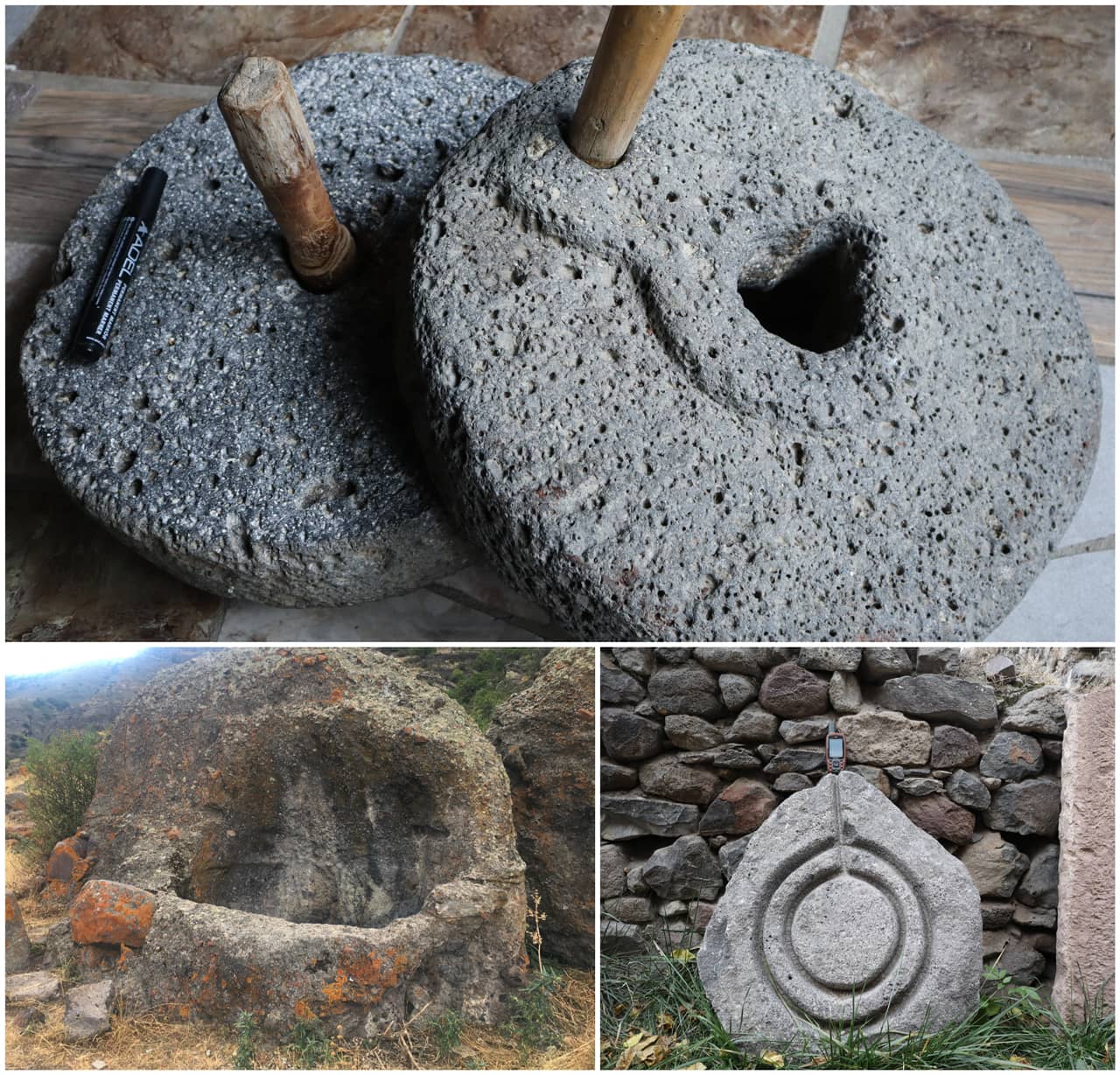
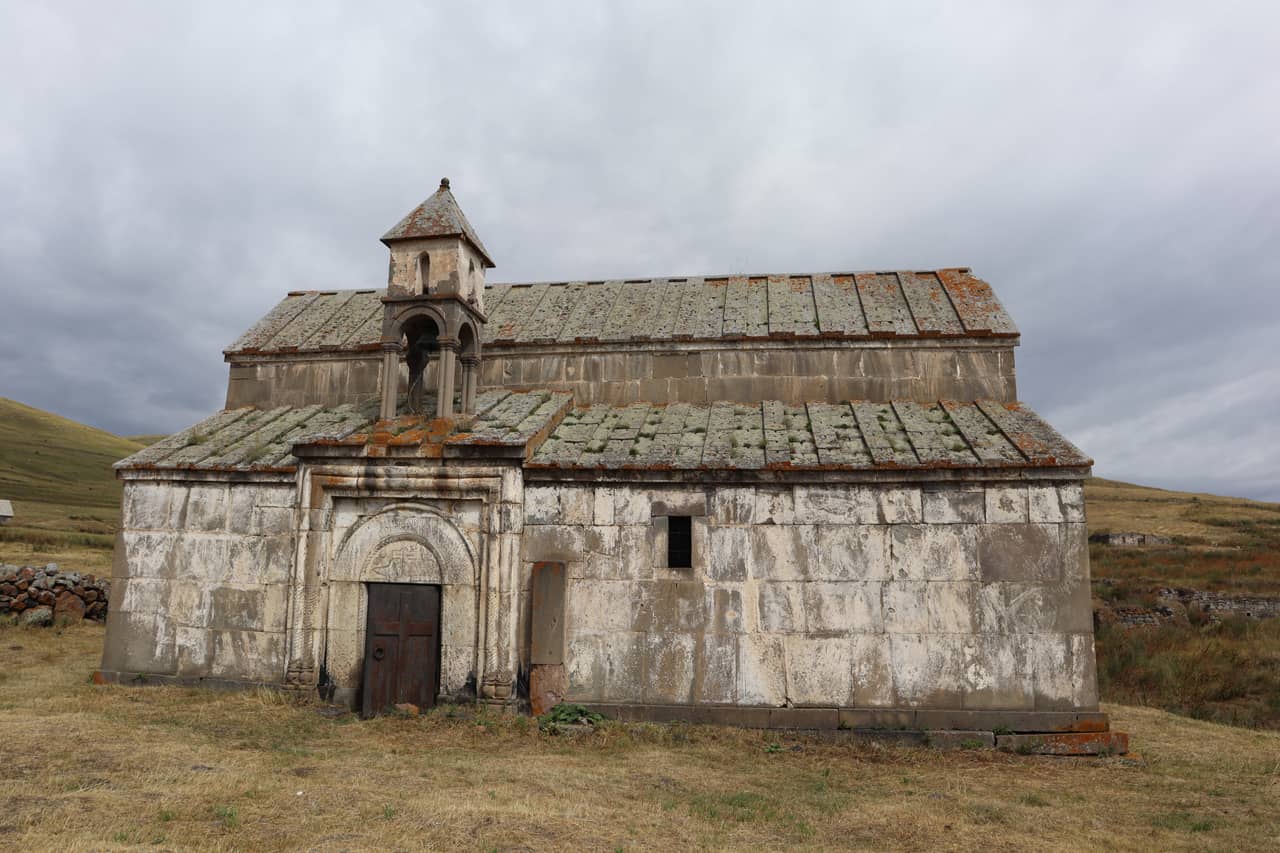
The Javakheti basalts hold notable cultural and architectural importance, due to their exceptional workability and enduring durability. The basalts have been used since Neolithic to Bronze age (5th millennium BC onward), megalithic (approx. 2000 BC – 200 BC), pre-Christian (before 4th Century AD) and late Christian dwellings (rock-cut monasteries, fortified cave complexes, and monastic communities). In Georgia, basalt megalithic structures can be seen in the fortress and ruins near Saro (∼1500 BC). Pre-Christian “cyclopean” megalithic buildings and menhirs occur at Khertvisi, Toki, Akhalkalaki, Dmanisi, etc. Basalt was used in the architecture of medieval churches-monasteries, namely St. George church, Pia; Evangelic-Lutheran Church, Trialeti; St. George church, Dashbashi and Catholic Church of Heart of the Jesus (1896–1898) at Khizabavra. Other notable examples include the 7th–8th century Church of the Archangel in Saro, Khertvisi Fortress (10th century), and the St. George’s Basilica (11th century) in Zeda-Tmogvi. The Etchmiadzin Cathedral (301–303 AD) and Haghpat Monastery (10th century) in Armenia, and Ani Cathedral (989–1001) and Church of St. Gregory of Tigran Honents (1215) in Eastern Türkiye are UNESCO World Heritage Sites, recognized for their cultural, spritual and architectural significance. We believe that Javakheti basalt is emblematic of the cultural geoheritage of the Lesser Caucasus region still in vogue for building houses, sculpting, pavements and utilitarian objects.
Khizabavra spring, which consists of 12 open water pools (Qurunebi) carved into the basalt monoliths.
Three aisled Basilica of St. George church, Zeda Tmogvi.
Main publication
Gabarashvili, K., Beridze, T., Kavsadze, M., Lobzhanidze, K., Vashakidze, G., Duraiswami, R.A. (2025) The geoheritage of basalts from the Javakheti Volcanic Highlands, South Georgia. 8th Global Stone Congress 2025, Drama, Greece, June 16 – 20, 2025.
Gabarashvili, K., Beridze, T., Baskar, K., Kavsadze, M., Lobzhanidze, K., Vashakidze, G., Gadapallu, P., Duraiswami, R.A. (2026) The Geoheritage Potential of Basalts from the Javakheti Volcanic Highlands, South Georgia. Geoheritage.