GeoSphere Austria's collections serve as an internationally important scientific resource and maintain the national paleontological and geological heritage.
Geo-collection description
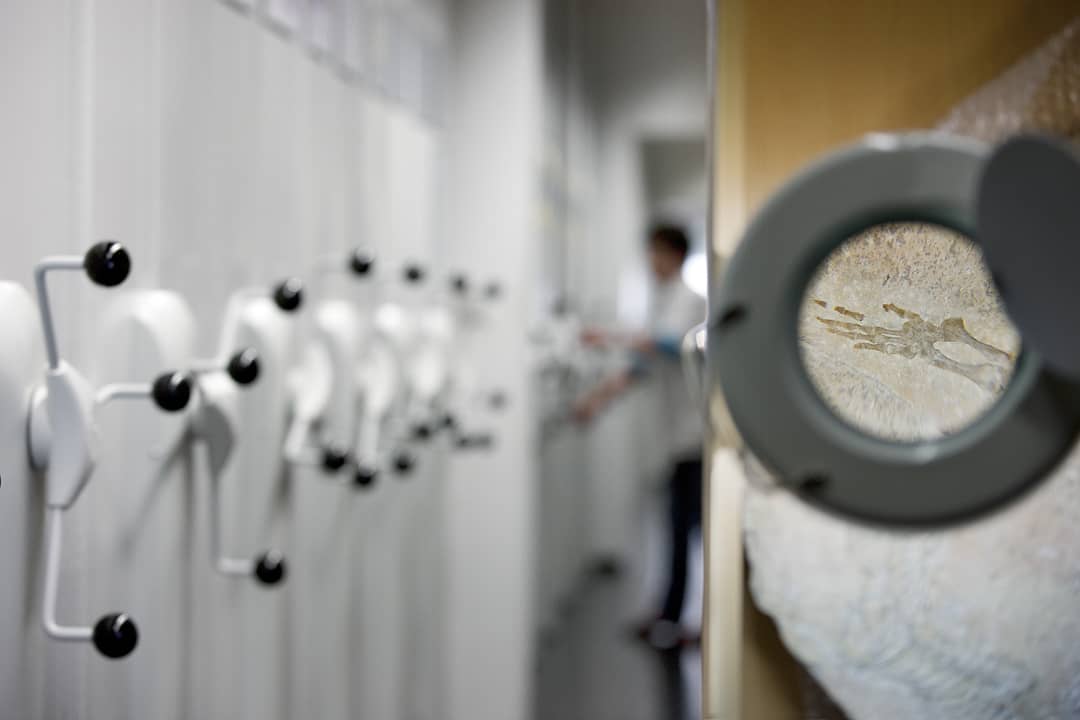
GeoSphere Austria’s collections comprise fossils, minerals, rocks, and drill cores, forming a comprehensive archive of Earth´s past. The palaeontological collection contains approximately 160,000 datasets and over a million fossils, including 18,700 datasets on microfossils and 26,000 on type specimens. These holdings document life from the Cambrian to the Quaternary and include material from Austria, the former Austro-Hungarian Empire, and worldwide localities. The geological and mineralogical collections preserve 7,500 minerals, 25,000 rock samples, and 441 drill cores representing 16 km of core length, complemented by extensive sediment residues. The institutional origins date back to 1835 with the Montanistisches Museum, later forming the foundation of the Imperial Geological Survey (Geologische Reichsanstalt). Despite wartime damage during 1945, significant portions of the collections were recovered. Since 1981, Austrian law has defined their role as a scientific resource, integrating them within the national geological survey’s Palaeontology department. Today, the collections support and enable research, geological mapping, and applied studies, while providing an archive of Austria’s geodiversity and a global reference for science. They represent nearly two centuries of scientific research and continue to grow through geological mapping and expeditions, representing an irreplaceable institutional and historical resource.
Geo-collection value
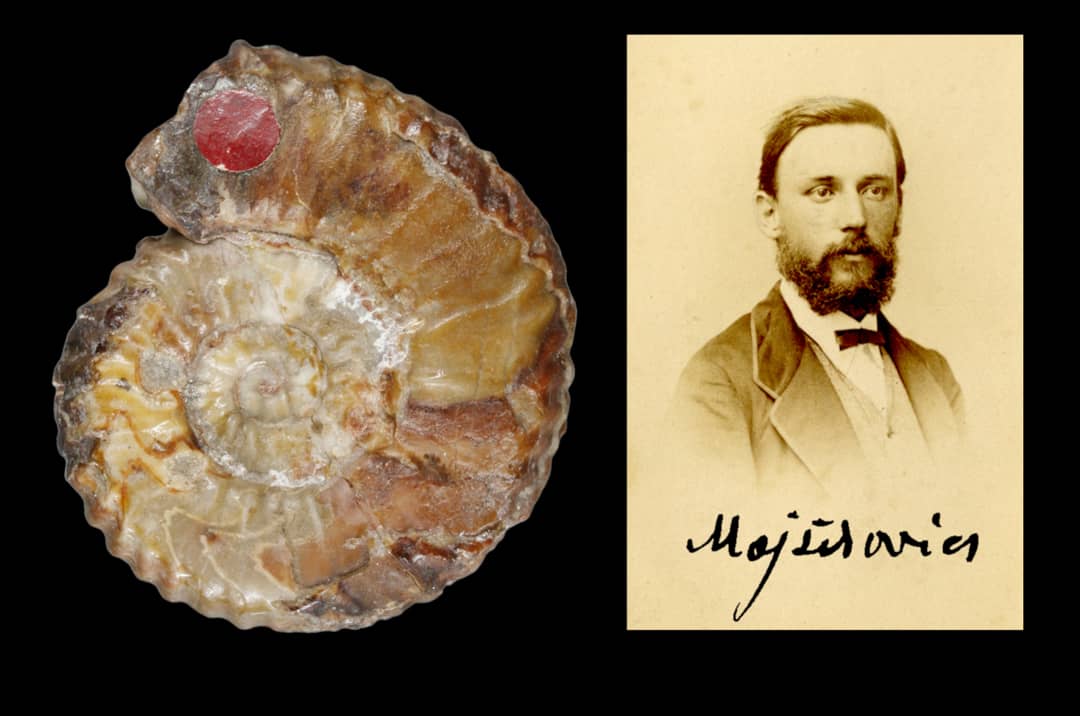
GeoSphere Austria curates one of the most significant geoscientific collections in the country, representing an invaluable scientific, historical, and cultural heritage. The collection holds more than one million fossils, about 26,000 of which are type specimens, representing key references for taxonomic and biostratigraphic research. It includes fossils from the Cambrian to the Quaternary, covering over 500 million years of Earth’s history and including an extraordinary diversity of taxa, from microfossils to vertebrates. Its historic specimens collected and studied by pioneering Austrian scientists such as Alcide d’Orbigny, Franz von Hauer, Rudolph Hörnes, Melchior Neumayr, Edmund von Mojsisovics, Alexander Bittner and Constantin von Ettingshausen underscore its cultural value, documenting the roots of palaeontology and geology in Central Europe (Gebhardt, 2010; Meller, 2010; Tatzreiter & Zorn, 2013). Today, the collections support advanced scientific research, including the reconstruction of past climates, environments, and biodiversity, as well as the creation of stratigraphic models that are essential for geological mapping. They also serve society through education, outreach, and public engagement, promoting awareness and knowledge of Earth’s history and its resources. Besides academia, these archives also help industry and policy makers manage land and resources, and protect the environment. By safeguarding Austria’s geological and palaeontological heritage, the collection ensures its transmission to future generations.
*Zorn, I. (2020). Verloren und gefunden–die Fossilien aus dem ehemaligen “Montanistischen Museum” (1835–1849) in den Sammlungen der Geologischen Bundesanstalt in Wien. Jahrbuch der Geologischen Bundesanstalt, 160, 251-317.
Tatzreiter, F., & Zorn, I. (2013). The Cephalopods of the Hallstatt Limestone Described in the Monographs by Edmund von MOJSISOVICS 1873, 1875 and 1902 Stored in the Palaeontological Collection of the Geological Survey of Austria. Abhandlungen der kaiserlich-königlichen Geologischen Reichsanstalt” beschrieben wurden, 1875, 1902.
Gebhardt, H. (2010). Foraminiferal holotypes, lectotypes, and syntypes stored in the paleontological collection of the Geological Survey of Austria. Jahrbuch der Geologischen Bundesanstalt, 150, 245-262.
Meller, B. (2010). Type Specimens of Ettingshausen’s Tertiary Flora in the Surroundings of Vienna (1851) in the Collections of the Geological Survey of Austria. Jahrbuch der Geologischen Bundesanstalt, 150, 101-121.
SIblík, M. Catalogue of the Triassic and Lower Jurassic Brachiopod Holotypes of Alexander BITTNER in the Collections of the Geological Survey of Austria. Jahrbuch der Geologischen Bundesanstalt, 150, 301-316.