Lower Cretaceous Tlayúa Lagerstätte Quarry

Mexico

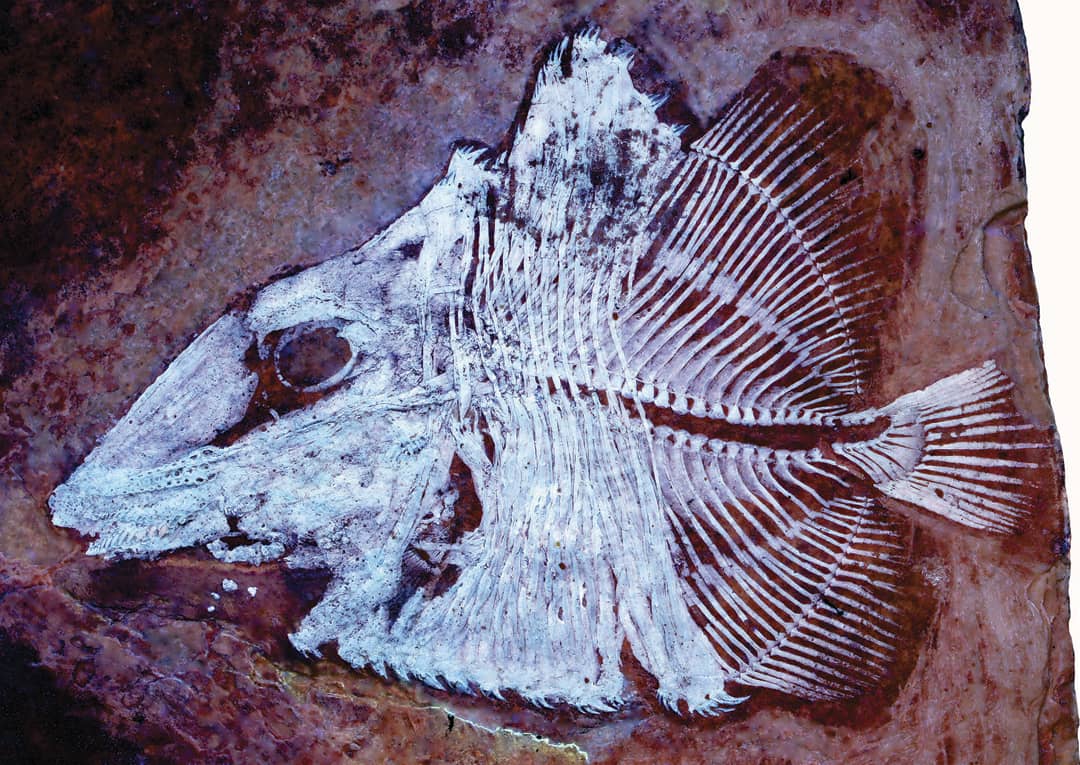
Young Macrosemiiform fish from Tlayúa under UV light.

Geological Period

Cretaceous (Lower Cretaceous)

Main geological interest

Paleontology
Stratigraphy and sedimentology

Location

Tepexi de Rodríguez / Puebla State, Mexico
18°35’51” N, 97°54’37” W

Young Macrosemiiform fish from Tlayúa under UV light.

An extraordinary preservation of fishes, reptiles and invertebrates recording critical information about biotic transition between Jurassic and Late Cretaceous.

Tlayúa contains abundant extraordinary well-preserved fossils of numerous species of fishes, reptiles, and invertebrates recording important episodes of life evolution at the Laurasia southern edge. Its fossil assemblage provides evidence of the mainly marine biotic transition between the Jurassic and Late Cretaceous in the western end of the Tethys Sea, near to the south of the nascent North American Western Seaway, Paleo-Pacific Ocean, and South America epicontinental Sea (Applegate et al., 1996; Alvarado-Ortega et al., 2007, 2020). The site is an important North American Cretaceous Lagerstätte with great potential for further discoveries about fossilitation processes and the anatomy of fossils organs.

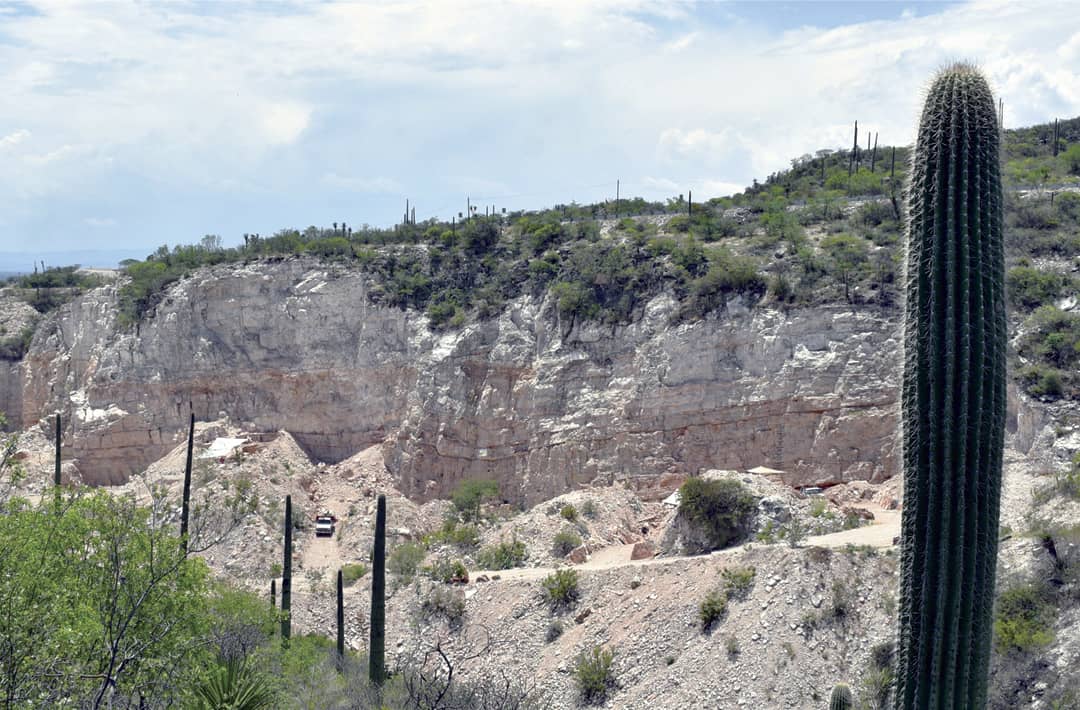
General view of the Tlayúa Quarry, showing the reddish laminated limestones of the exceptionally fossil-rich Middle Member of the Tlayúa Formation.

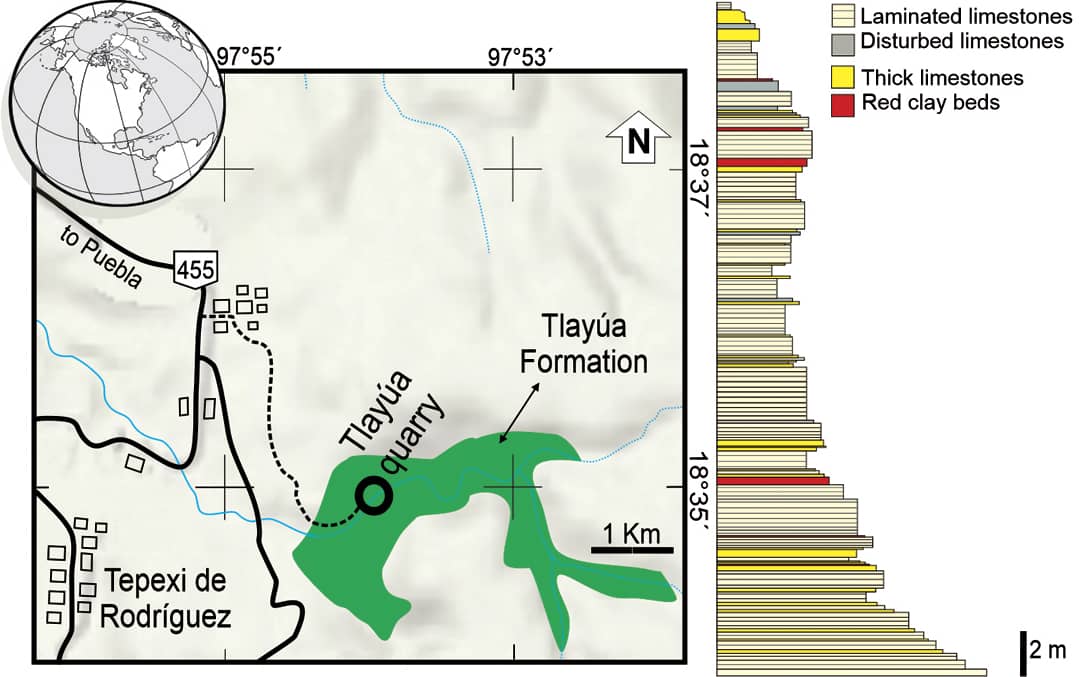
Tlayúa Quarry is an emblematic Lagerstätte embracing a beautiful story on conserving Mexican paleontological heritage (Martill, 1989; Applegate et al., 2006). The site exhibits a 35-meter-thick Middle-upper Albian sequence of thin-beded limestone alternating with thin layers of red volcanic clay, deposited in a shallow, tranquil tropical coastal lagoon. The sequence is the Middle Member of the Tlayúa Formation (Espinosa-Arrubarrena and Applegate, 1996), and it has yielded an exceptionally well-preserved fossil assemblage of continental and marine organisms, predominantly marine fishes and terrestrial reptiles. Preservation is remarkable, and diversity is high. Delicate structures and soft tissue, such as muscle and gills are preserved. The conservation plan of residents, landowners, government, and paleontologists encompasses protecting part of the Tlayúa Formation and all the recovered fossils. The quarry and an onsite Regional Museum, established to exhibit these and other fossils from the Mixtec region, serve as critical sites for Mexican Earth Sciences scholars and provide free recreational access for the public. Given its age and geographical position, Tlayúa documents the transition between Late Jurassic biotas of the western domains of the Tethys Sea as known in Europe, the Middle East, and Africa, and their Late Cretaceous descendants of North and South America.

The discovery of Tlayúa Quarry advanced knowledge of Albian fish diversity in tropical America and led to the establishment of good practices and conservation policies, today emulated in other parts of the country, putting Mexico on a good path for conserving its paleontological heritage.

Map and stratigraphical column of the Tlayúa quarry, Tepexi de Rodríguez, Puebla, Mexico.

Alvarado-Ortega, J. et al. (2007) “Exceptional preservation of soft tissues in Cretaceous fishes from the Tlayua Quarry, central Mexico.,” Palaios, 22(6), pp. 682–685. Available at: https://doi.org/10.2110/palo.2006.p06-059r.

Alvarado-Ortega, J., Than-Marchese, B.A. and Melgarejo-Damián, M.D.P. (2020) “On the Albian occurrence of Armigatus (Teleostei, Clupeomorpha) in America, a new species from the Tlayúa Lagerstätte, Mexico,” Palaeontologia Electronica, 23(3), p. a52. Available at: https://doi.org/10.26879/1107.

Applegate, S.P., Buitron-Sanchez, B. and Solis-Marin, F. (1996) “Seven New Taxa of Holothurians (Holothuroidea: Echinodermata) From the Lower Cretaceous (Albian) Tlayua Quarries, Near Tepexi De Rodriguez, Puebla, Mexico,” The Paleontological Society Special Publications, 8, pp. 10–10. Available at: https://doi.org/10.1017/S2475262200000125.

Applegate, S.P. et al. (2006) “Revision of Recent Investigations in the Tlayúa Quarry,” in F.J. Vega et al. (eds.) Studies on Mexican Paleontology. Dordrecht: Springer Netherlands (Topics in Geobiology), pp. 275–304. Available at: https://doi.org/10.1007/1-4020-3985-9_13.

Espinosa-Arrubarrena, L. and Applegate, S.P. (1996) “A paleoecological model of the vertebrate bearing beds in the Tlayúa Quarries, near Tepexi de Rodriguez, Puebla, Mexico.,” in G. Arratia and G. Viohl (eds.) Mesozoic Fishes-Systematics and Paleoecology. by Verlag Dr. Friedrich Pfeil, München, Germany, pp. 539–550.

Martill, D.M. (1989) “A new ‘Solenhofen’ in Mexico,” Geology Today, 5(1), pp. 25–28. Available at: https://doi.org/10.1111/j.1365-2451.1989.tb00607.x.

Ricardo Barragán Manzo.
Instituto de Geología, Universidad Nacional Autónoma de México

Jesús Alvarado Ortega.
Instituto de Geología, Universidad Nacional Autónoma de México

Luis Espinosa Arrubarrena.
Instituto de Geología, Universidad Nacional Autónoma de México

The Third 100 IUGS Geological Heritage Sites have been officially announced!
Privacy overview

This website uses cookies so that we can offer you the best possible user experience. Cookie information is stored in your browser and performs functions such as recognizing you when you return to our website or helping our team to understand which sections of the website you find most interesting and useful.