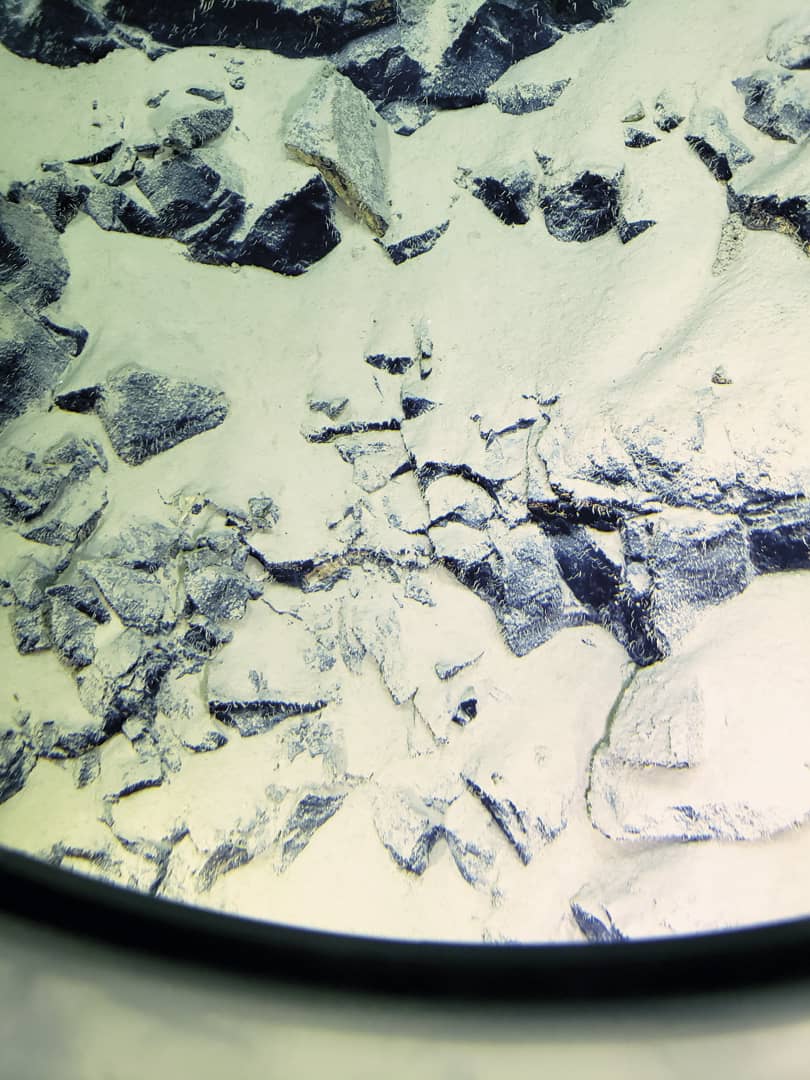
Angular boulders of peridotite on the landward slope in Challenger Deep, Mariana Trench.
Geological Period
Paleogene to Quaternary
Main geological interest
Marine Geology
Tectonics
Location
Pacific Ocean, Micronesia
11°22’24” N, 142°35’30” E
Angular boulders of peridotite on the landward slope in Challenger Deep, Mariana Trench.
The deepest place on Earth's solid surface.
Like Mt. Everest, the Challenger Deep represents an extreme of Earth’s surface and holds outstanding scientific and symbolic value. Its exceptional depth and geological setting offer unparalleled opportunities to advance deep-sea technology, foster international research collaboration, and deepen our understanding of subduction processes and biosphere-geosphere interactions. As a natural frontier, it embodies both scientific heritage and exploration spirit, making it a compelling candidate for international heritage designation.
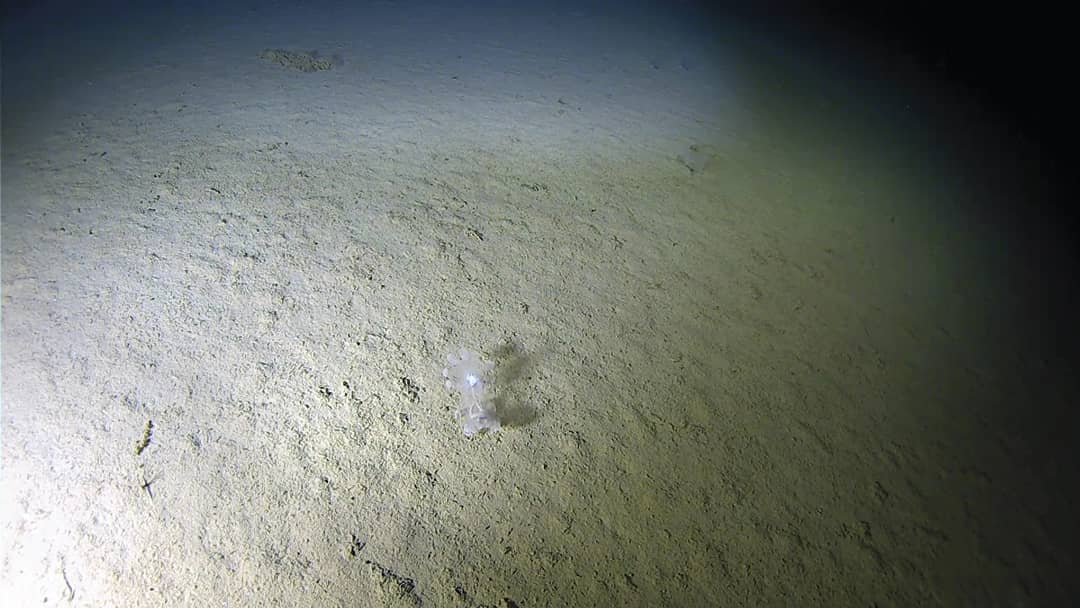
The deepest ocean floor in Challenger Deep, Mariana Trench, taken by Alan J. Jamieson.
Geological description
Oceanic trenches mark zones where oceanic plates descend into the mantle, initiating convergent plate boundaries. The Challenger Deep, located in the southern Mariana Trench, is the deepest known point on Earth’s solid surface. Its unique geodynamic setting has attracted international scientific attention; Japanese, American, Chinese, and private groups have used manned submersibles and remotely operated vehicles to investigate tectonic and geophysical processes (e.g., Kato et al., 1998; Xu et al., 2023). Recent research suggests that back-arc spreading in the Mariana Trough over the past 5 million years, combined with the oblique collision of the Caroline Ridge, has reoriented the plate boundary from north–south to east–west. This reorganization has produced trench rollback, a slab tear south of Guam, and a narrow slab segment to the west (Fryer et al., 2003; Gvirtzman and Stern, 2004). Asthenospheric upwelling beneath the forearc facilitates extreme slab bending, contributing to the trench’s exceptional depth. Additionally, the inner trench wall reveals the Moho at ~5,800 meters, displays signs of recent volcanism, and contains a unique hydrothermal vent system (Ohara et al., 2012; Ribeiro et al., 2013). These features make the Challenger Deep a key site for understanding subduction dynamics, mantle-crust interactions, and forearc evolution at ultra-deep convergent margins.
Scientific research and tradition
The Challenger Deep has been explored since the 1950s using echo sounding, deep-sea submersibles, and remotely operated vehicles. Its exploration has advanced research in plate tectonics, subduction dynamics, and extreme deep-sea biology, and it has served as a key site for international scientific collaboration and technological innovation in ocean exploration.
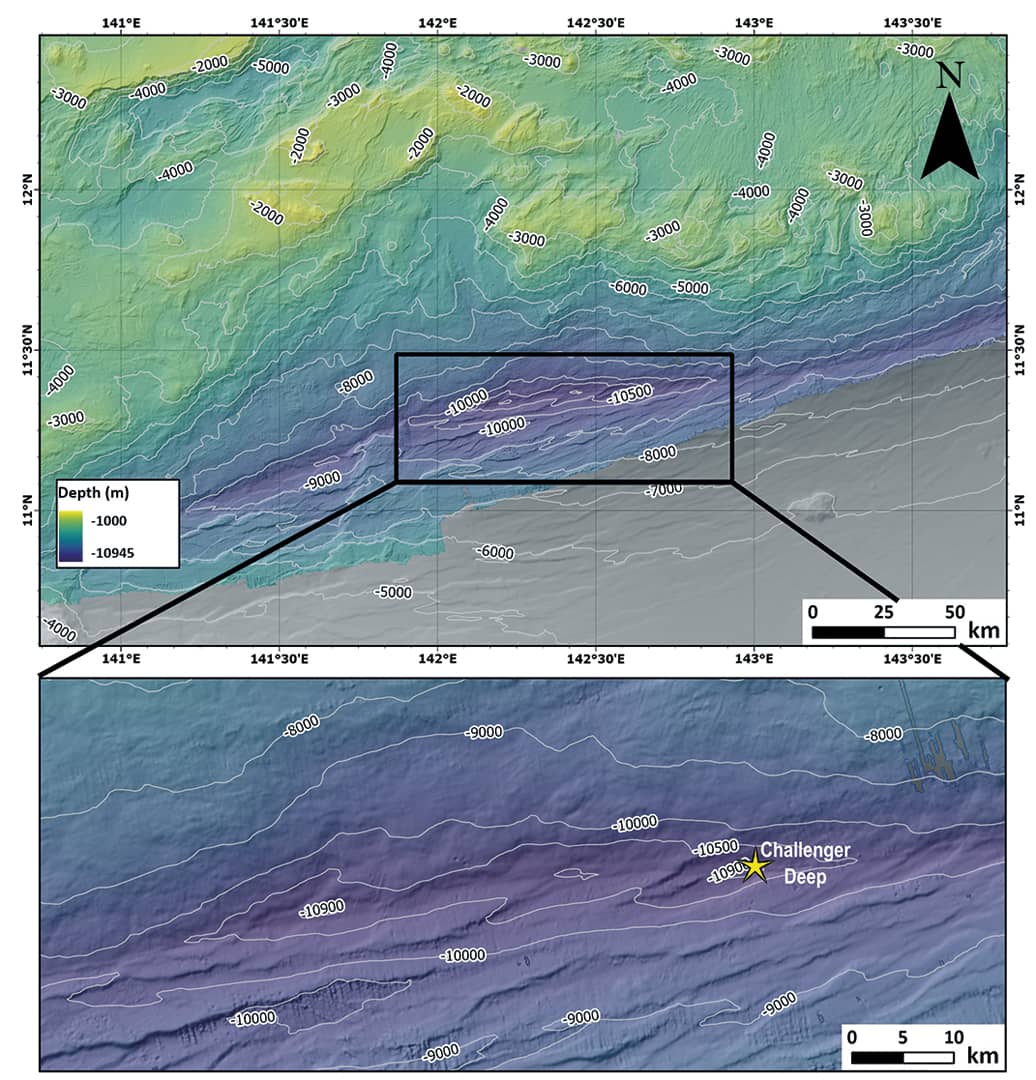
High resolution submarine topographic maps of Challenger Deep (Drawn by Yakup Niyezi / Inkfish LLC).
Reference
Fryer, P. et al. (2003) “Why is the Challenger Deep so deep?,” Earth and Planetary Science Letters, 211(3), pp. 259–269. Available at: https://doi.org/10.1016/S0012-821X(03)00202-4.
Gvirtzman, Z. and Stern, R.J. (2004) “Bathymetry of Mariana trench-arc system and formation of the Challenger Deep as a consequence of weak plate coupling,” Tectonics, 23(2). Available at: https://doi.org/10.1029/2003TC001581.
Kato, C. et al. (1998) “Extremely Barophilic Bacteria Isolated from the Mariana Trench, Challenger Deep, at a Depth of 11,000 Meters,” Applied and Environmental Microbiology, 64(4), pp. 1510–1513. Available at: https://doi.org/10.1128/AEM.64.4.1510-1513.1998.
Ohara, Y. et al. (2012) “A serpentinite-hosted ecosystem in the Southern Mariana Forearc,” Proceedings of the National Academy of Sciences, 109(8), pp. 2831–2835. Available at: https://doi.org/10.1073/pnas.1112005109.
Ribeiro, J.M. et al. (2013) “Geodynamic evolution of a forearc rift in the southernmost Mariana Arc,” Island Arc, 22(4), pp. 453–476. Available at: https://doi.org/10.1111/iar.12039.
Xu, W. et al. (2023) “Challenger Deep basalts reveal Indian-type Early Cretaceous oceanic crust subducting in the southernmost Mariana Trench,” Geology, 51(9), pp. 865–869. Available at: https://doi.org/10.1130/G51258.1.
Author(s)
Robert J. Stern.
University of Texas at Dallas, USA
Yasuhiko Ohara.
Hydrographic and Oceanographic Department of Japan
Katsuyoshi Michibayashi.
Nagoya University, Japan
Yakup Niyazi.
Mindloo-UWA Deep-Sea Research Centre, Australia
Alan J. Jamieson.
Mindloo-UWA Deep-Sea Research Centre, Australia
Victor Vescovo.
Independent Venture Caladan LLC, USA
Dylan Tylor.
Independent venture capitalist , USA
Nicole Yamase.
University of Hawai’i at Mānoa, USA
Hiroshi Kitazato.
Tokyo University of Marine Science and Technology, Japan