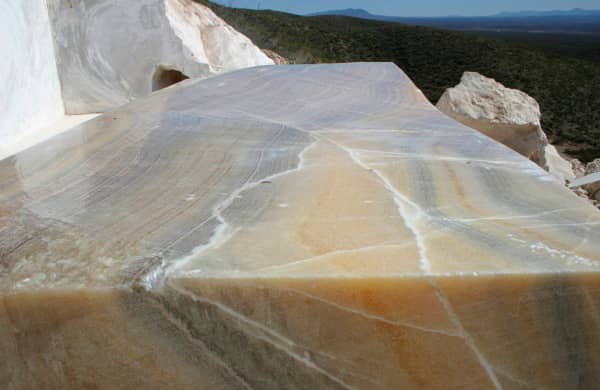
Calcareous Onyx (Marble Onyx) composed predominantly of calcium carbonate (CaCO₃ ~99%). It forms through hydrothermal precipitation processes and displays fibrous to lamellar textures with distinctive translucent banding.
Aesthetics
Ain Smara Onyx is highly valued for its translucent appearance and natural banding. Colors range from white, cream, and yellow to amber and reddish-brown due to iron oxide impurities. The stone takes a high polish and is widely appreciated for decorative architectural elements and sculptures.
Geological settings
The Ain Smara region includes geological formations ranging from the Lower Cretaceous to the Quaternary. The area is affected by major fault systems with dominant N–S orientations. Hydrothermal fluids circulating through these fractures precipitated calcium carbonate, forming the banded calcareous onyx deposit.
Location
Ain Smara deposit, located approximately 18 km southwest of Constantine city in northeastern Algeria. The deposit extends over an area of about 1200 m within the Constantine basin.
Opéra Garnier in Paris.
Ain Smara Onyx: A historic Algerian decorative stone used in prestigious monuments worldwide.
Ain Smara Onyx has been exploited since Roman times and represents one of the most historically significant ornamental stones of North Africa. Archaeological evidence indicates that the stone was used in Roman architecture and decorative art, highlighting its early economic and cultural importance in the Mediterranean region.
During the French colonial period (1882–1962), quarrying activity intensified, and Ain Smara Onyx began to be exported internationally. The stone gained global recognition due to its unique translucent banding and high aesthetic value. It was used in several prestigious architectural projects, including decorative elements in the Opéra Garnier in Paris, as well as in restoration works of important historical buildings. Records also indicate that Algerian onyx was used in decorative features during the reconstruction of the White House in Washington, D.C. after the fire of 1814.
Today, Ain Smara Onyx continues to represent an important geological and cultural resource for Algeria. The stone supports local quarrying activities and contributes to regional craftsmanship, stone carving, and decorative stone industries. Its historical continuity of use, aesthetic quality, and geological uniqueness make Ain Smara Onyx an important candidate for recognition as a Global Heritage Stone Resource.
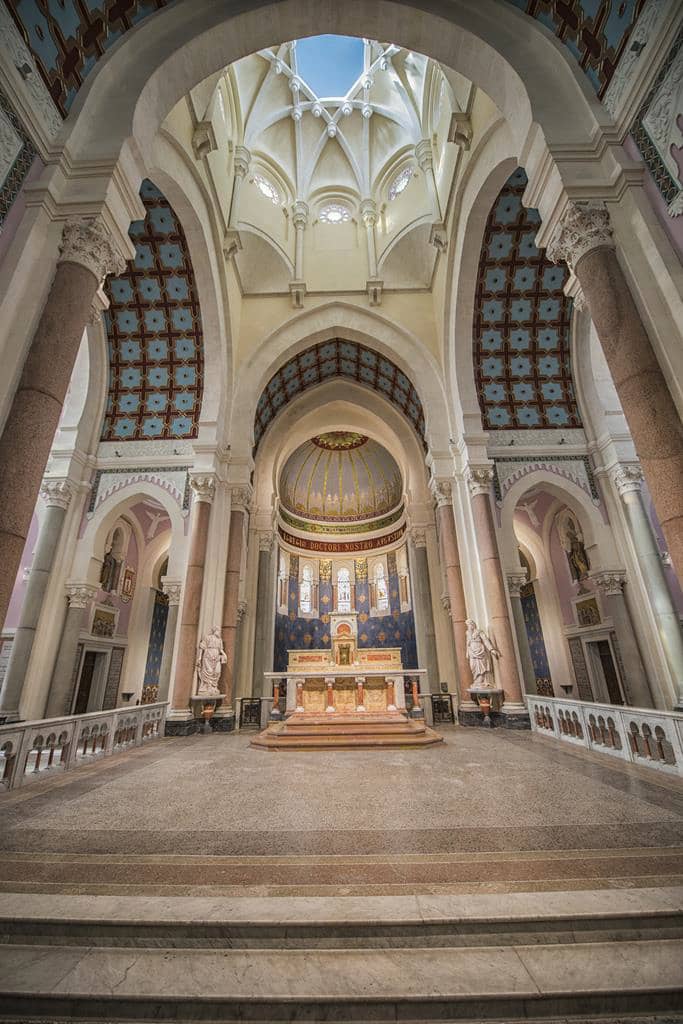
St. Augustine’s Basilica, Annaba, Algeria 1842.
White House East Room mantel, 1952.
Main publication
Diab, H. (2015). Onyx from Ain Smara (North-Eastern Algeria): A Natural Stone to be Considered as a Global Heritage Stone. Available on ResearchGate.