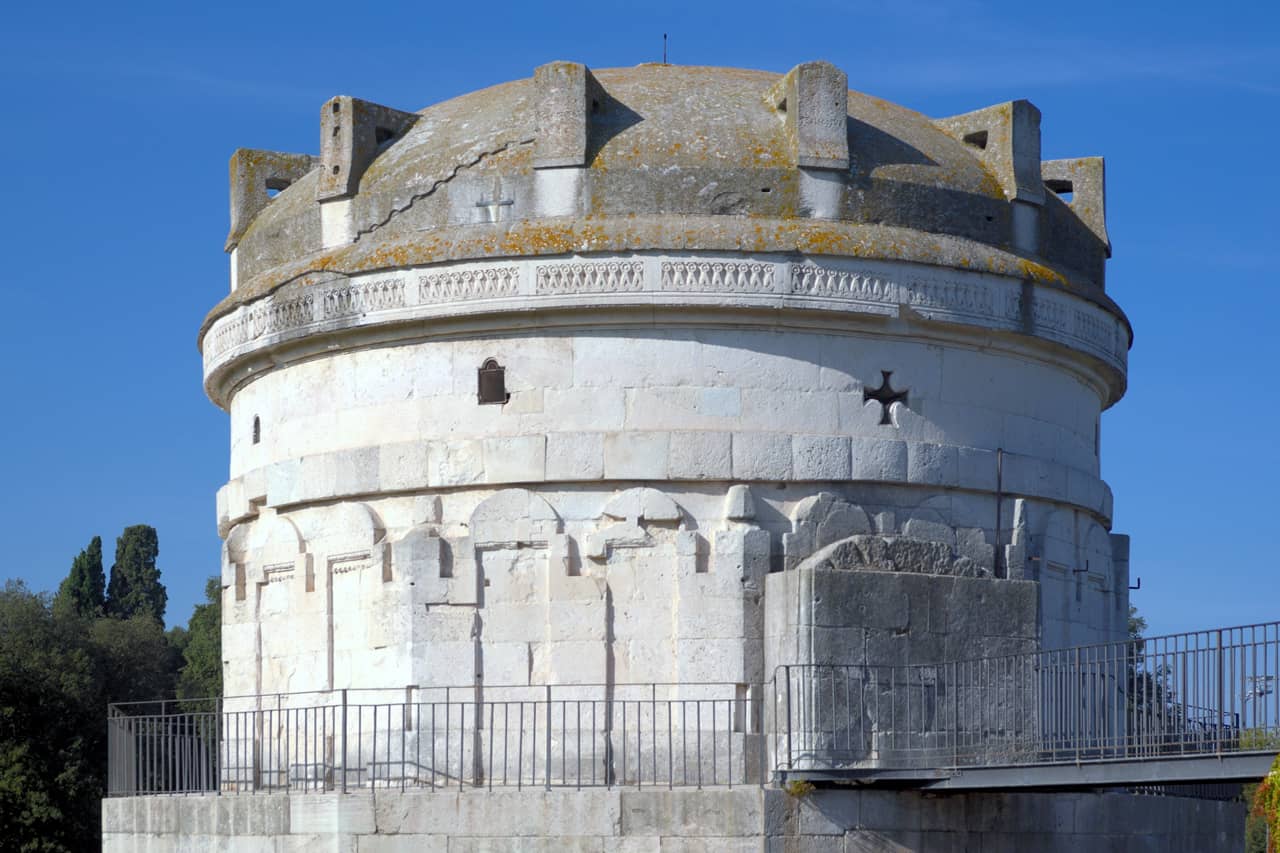
Mausoleum of Theodoric (6th century AD), Ravenna, Italy. (photo by authors).
Local native name
Pietra di Aurisina
Year designation
2026
Lithology
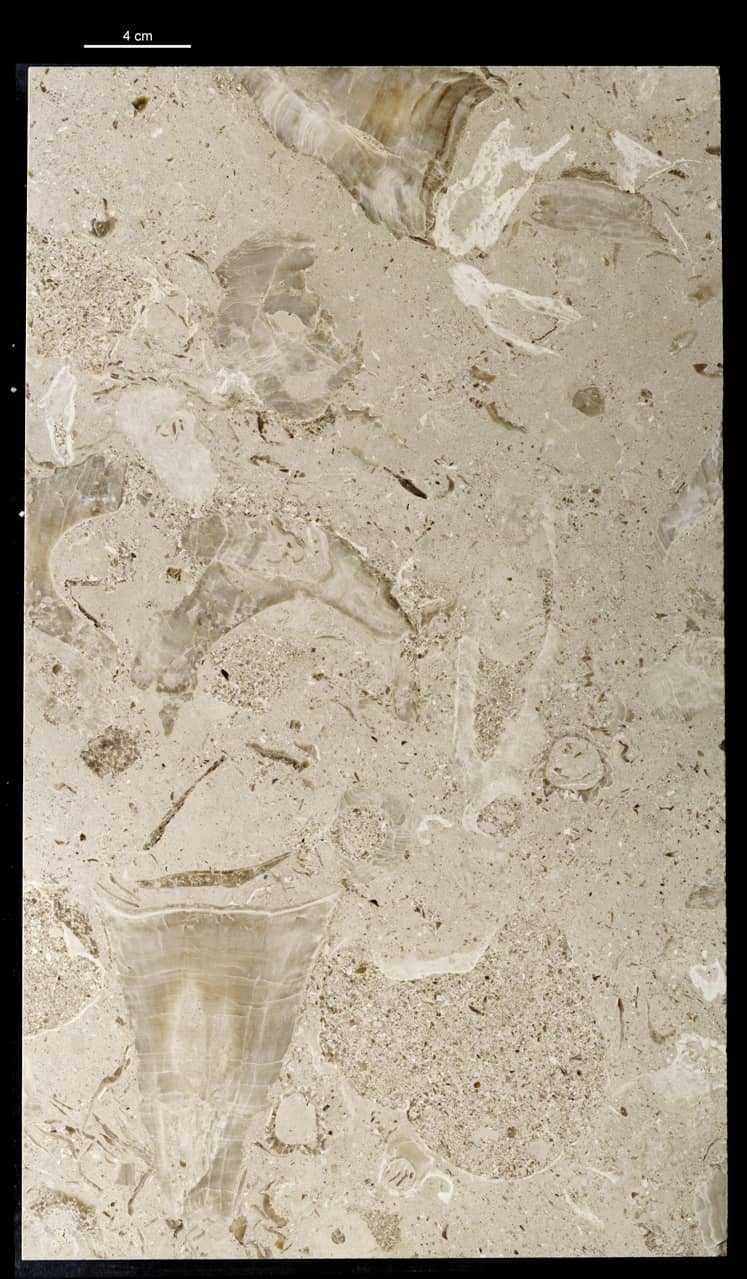
Rudist limestone.
Aesthetics
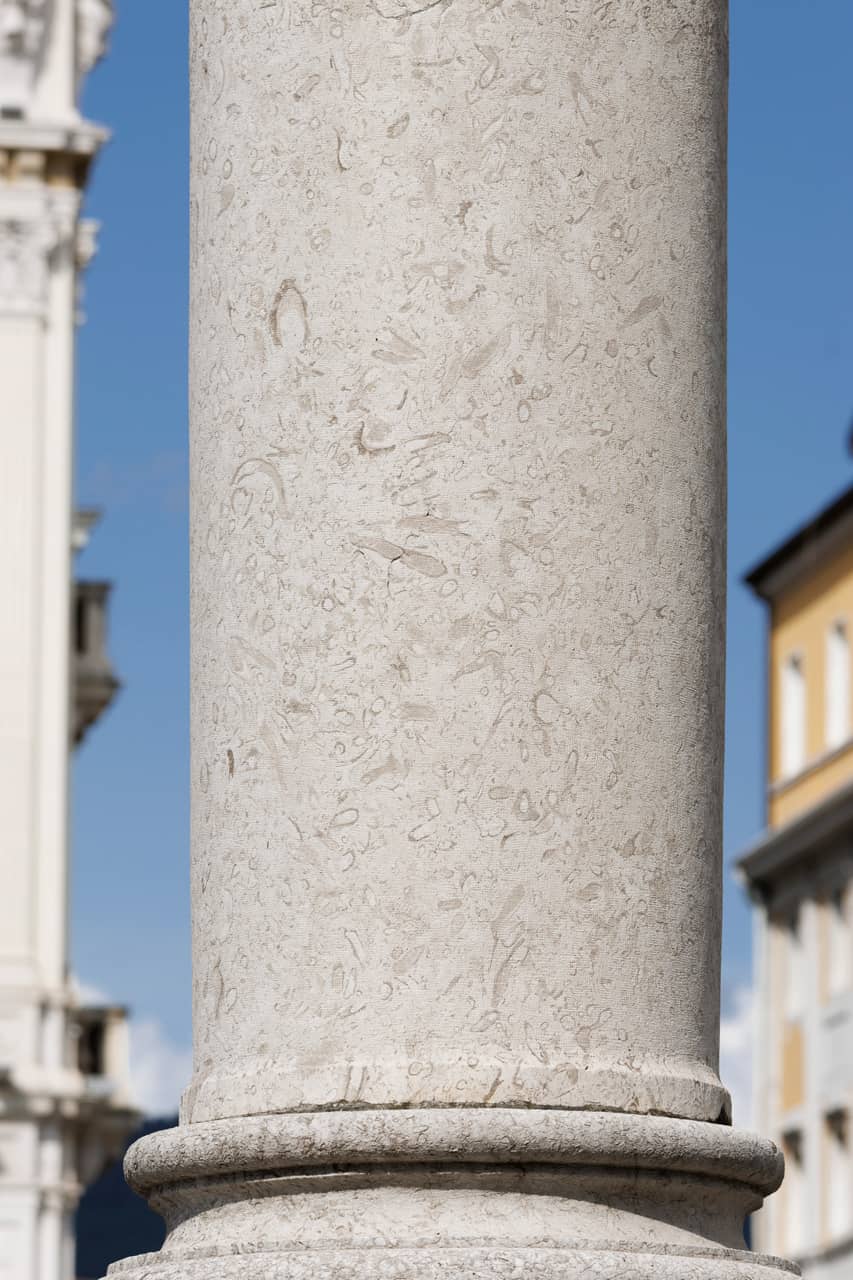
Matrix colour can vary from light grey to taupe. The size and arrangement of the fossil fragments (mainly rudists) and the vein pattern defines the different commercial varieties.
Their texture ranges from homogeneous (e.g. Aurisina Chiara) and grainy (e.g. Aurisina Granitello) to “blooming” (e.g. Aurisina Fiorita).
Aurisina/Nabrežina, Trieste (Italy) in the Classical Karst area.
Mausoleum of Theodoric (6th century AD), Ravenna, Italy. (photo by authors).
Aurisina/Nabrežina Stone.
Aurisina/Nabrežina Stone is one of the most historically significant building stones of the Karst region and has played an important role in European architecture for over two millennia. Its long quarrying tradition enabled large-scale production and long-distance distribution, supplying construction and decorative materials for monumental architecture far beyond the Karst itself. Quarrying became systematic during the Roman period in the area of Aurisina/Nabrežina, within the territory of Aquileia, from where the stone supplied important civic and monumental construction projects across present northern Italy, western Slovenia, and northwestern Croatia.
Its historical importance is reflected in monuments now included within UNESCO World Heritage Sites, like the Roman city of Aquileia and the Mausoleum of Theodoric in Ravenna (6th century CE), where the Aurisina/Nabrezina Stone is present.
A major phase of expansion occurred in the 19th century with the construction of the Southern Railway (1857), which enabled large-scale export across the Austro-Hungarian Empire. The stone was widely used in monumental architecture in cities such as Vienna and Budapest, whose historic centres are also UNESCO World Heritage Sites.
This long-standing quarrying tradition profoundly shaped the regional economy and communities, while leaving a lasting mark in the landscape.
Today, active quarries in Aurisina supply a global market, contributing to prestigious projects and sustaining a millennia-old tradition of Karst stoneworking.
Detail of Ionic pilasters on the façade of Palazzo Pitteri (1780), Triest, Italy (photo by S. Castelli).
The Ivere/Cava Romana quarry in Aurisina/Nabrežina (Triest, Italy) (photo by St. Castelli).
Main publication
Bridi E., Urban I., Mazzoli C., Brajkovic R., Novak M., Bensi S., Consorti L., Previato C., Bonetto J., Preto N., The heritage value of Karst rudist limestones: Aurisina/Nabrežina Stone, Lipica Stone, and Repen Stone of Italy and Slovenia.
Submitted to Special Issue “Heritage stones as the foundations for UNESCO-listed cultural sites” of Geoheritage Journal.
Author(s)
Nereo Preto, Eliana Bridi, Ingrid Urban, Claudio Mazzoli