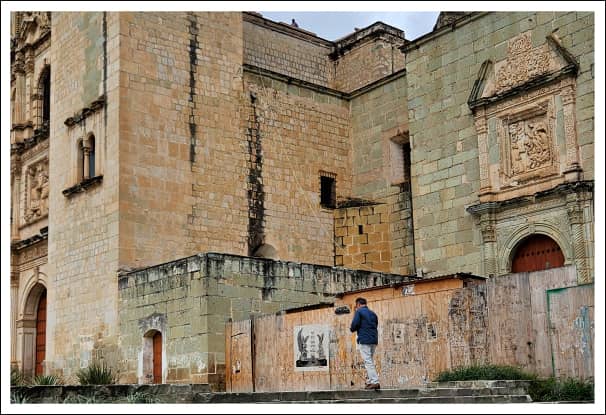
Santo Domingo de Guzmán Church façade, at the Historic Centre of Oaxaca («Historic Centre of Oaxaca and Archaeological Site of Monte Albán» UNESCO World Heritage).
Local native name
Cantera Verde
Year designation
2026
Lithology
Andesitic tuff with hydrothermal (propylitic) alteration.
Aesthetics
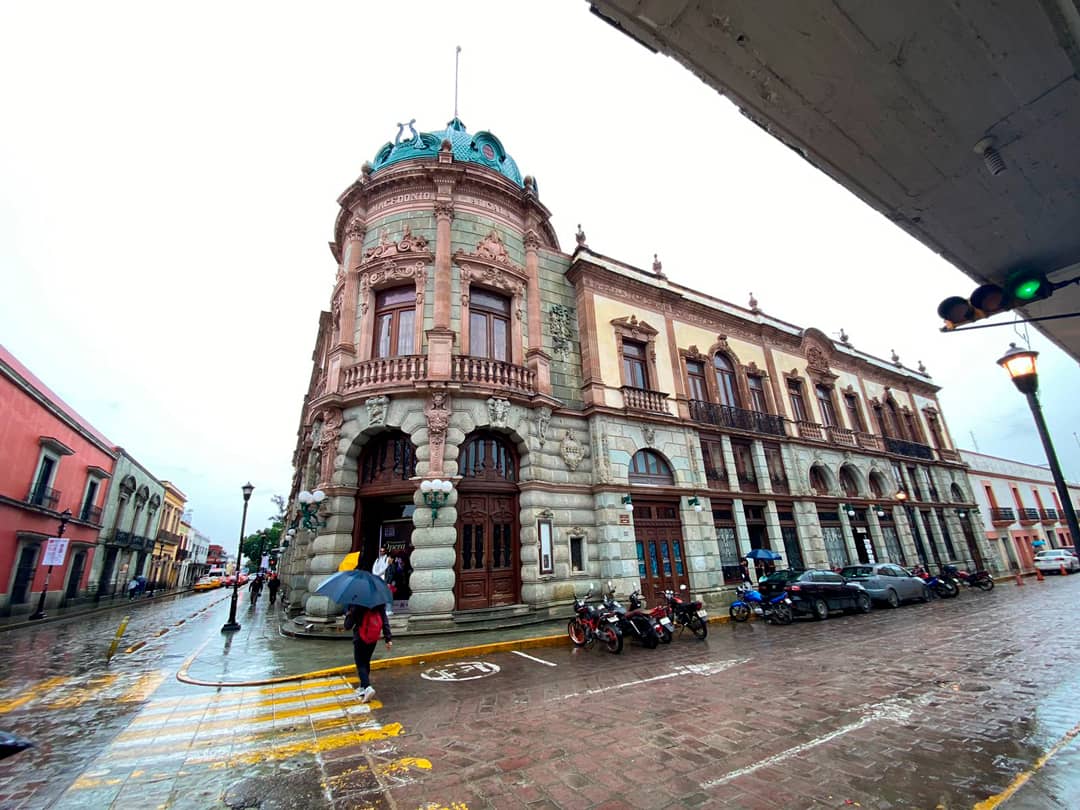
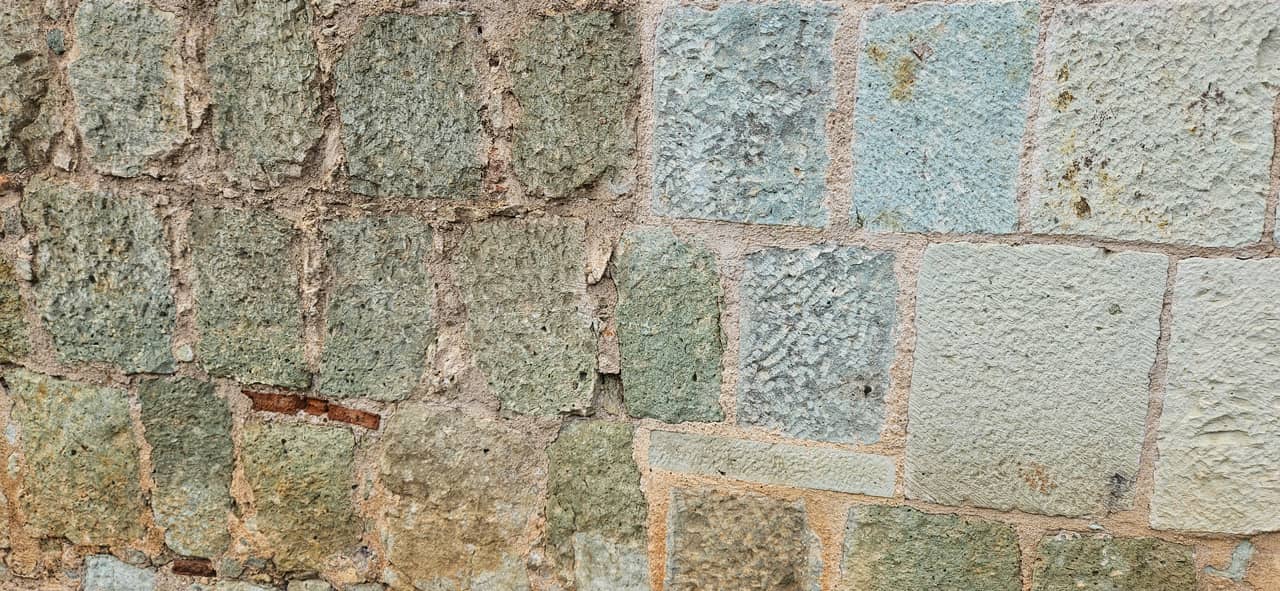
This stone is known for its distinctive coloration, a shade that ranges from a pale gray to bluish-green and intensifies when wet from the rain.
Geological settings
This stone is associated with the Tertiary magmatic units of the Sierra Madre del Sur igneous province. During the Miocene, volcanism associated with subduction-related calc-alkaline magmatism occurred under local extensional tectonic regime. As a product of this volcanism, andesitic tuffs were deposited, which, having undergone propylitic hydrothermal alteration, acquired their distinctive greenish coloration.
Location
Oaxaca, Mexico.
Santo Domingo de Guzmán Church façade, at the Historic Centre of Oaxaca («Historic Centre of Oaxaca and Archaeological Site of Monte Albán» UNESCO World Heritage).
Unique green volcanic stone that gives the monumental city of Oaxaca its distinct urban identity —a colorful mosaic of colonial and vernacular architecture.
This stone has been used since the 16th century for the construction of various buildings: from monumental religious architecture and government offices to stately residences and decorative elements in vernacular structures. Its use has continued to the present day, incorporating it into paving stones, sidewalks, and fountains in the urban design of Oaxaca. This sustained demand has required the extraction of stone from several quarries. The first sites were located on the outskirts of Oaxaca City, but as the city expanded, they were closed. New deposits were then sourced in the Etla Valley, which remains the primary supplier today.
The art of quarrying this stone is an important cultural and economic activity for Oaxacan artisans, who extract, cut, carve, and polish it for both the restoration of heritage buildings and the integration of contemporary elements. Its unique color remains a defining characteristic of the city of Oaxaca.
Macedonio Alcalá Theatre built with Oaxaca Green Tuff, appearing vivid and lustrous after a rain shower.
Part of the West façade of the Santo Domingo de Guzmán, at the Historic Centre of Oaxaca («Historic Centre of Oaxaca and Archaeological Site of Monte Albán» UNESCO World Heritage).
Main publication
Gómez, H., López, H.Z., Alonso, E.M., Arellano, P.M. (2019): Analysis of the Mineralogical and Petrographic Characteristics of Stone Quarry “Cantera” from Oaxaca, Mexico, and Its Relation with Its Resistance and Durability Properties, Academia XXII, 20: 58-71. (DOI: https://doi.org/10.22201/fa.2007252Xp.2019.20).
Author(s)
Carles Canet Miquel, Fernanda Martínez Camacho, Nora Ariadna Pérez Castellanos, M. Guadalupe Dávalos Elizondo, Nabil Rodríguez Blanco, Raúl Mena Gallegos.