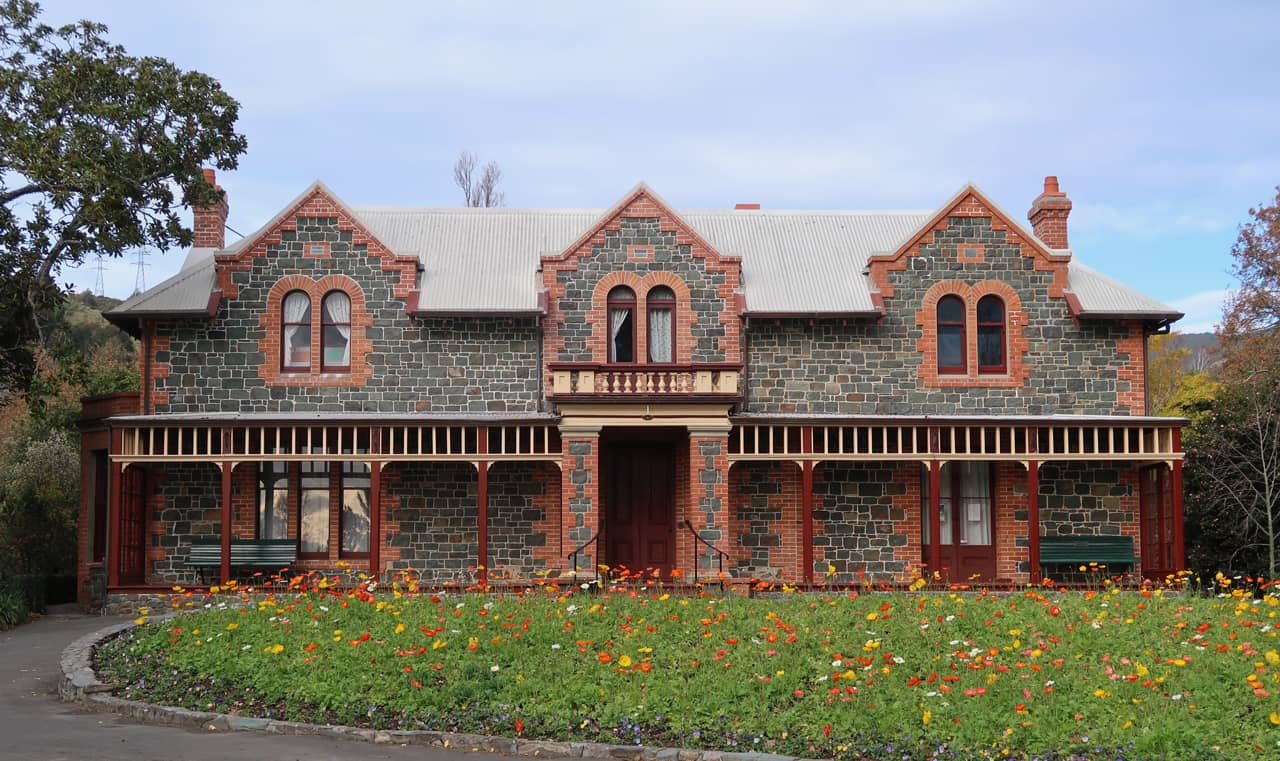
Greywacke is used as the main building stone of Isel House, Isel Park, Stoke, New Zealand [41°18’46.85″S, 173°14’25.21″E]. This historic house was built by Thomas and Mary Marsden between 1849 and 1915. Since 1960, it has been owned by Nelson City Council. Photo by Mike Dickison (Wikidata: Q56458901) June 10, 2019 [https://de.wikipedia.org/wiki/Datei:Isel_House.png].
Local native name
Whatuaho (Māori); Ōnewa (Māori, referring to dark grey); Hōanga utoka (Māori)
Year designation
2026
Lithology
New Zealand Greywacke is a Mesozoic clastic sedimentary rock formed mainly by sediment input into a deep trench from a nearby Gondwana continent. This process occurs either without magmatic influence or with some contribution from intermediate, andesitic volcanism along a volcanic island arc at the subduction front. As a fine-grained, “dirty” sandstone, the level of its “dirtiness' reflects the volcanic impact on deep marine, turbidite-driven accretionary wedge processes at convergent plate boundaries along Gondwana's eastern margin.
Aesthetics
The usual fractured pattern, featuring mineralised zones and sparkling felsic and mafic minerals, is defined by a grey hue and is characteristic of New Zealand's mountain landscapes. Its natural texture, calcite veins, and grey coloration have contributed to New Zealand Greywacke becoming a popular selection for park and public space landscaping across the country.
Geological settings
Greywacke is a common rock type found in the early Palaeozoic non-volcanic Buller Terrane and the mixed, volcanic-dominated Takaka Terrane. However, these are not the typical locations for New Zealand Greywacke, as it generally forms narrow zones within condensed lithostratigraphic units. The main greywacke ridges that dominate the New Zealand landscape are part of tectonostratigraphic terrains accreted along the eastern margin of Gondwana through complex subduction-dominated processes, including accretionary prism formation, long-lasting mass movement from continent to deep trenches, and formation of volcanic arcs. These terrains are distinguished as
Caples (in the South Island) and Waipapa (in the North Island) Terrain that are Permian-Triassic volcanic-derived deep water accretionary wedge rocks and the
Torlesse Composite Terrane that composed of the Permian-Triassic continent-derived accretionary wedge rocks with no volcanic detritus named Rakaia Terrain (older Torlesse) and the Waioeka-Omaio Terrain (younger Torlesse), which is an early Cretaceous volcanic- and continent -derived turbidite succession, and the
Pahau Terrain that formed in Late Jurassic – Early Cretaceous with volcanic input, like those rocks part of the Rakaia Terrain rocks.
New Zealand Greywacke is the “fossilized” remnant of ancient plate tectonic and associated sedimentary processes that have shaped New Zealand today through active convergent plate margin activity. Greywacke represents New Zealand’s evolution as a complex history along a plate margin since Palaeozoic times.
Location
New Zealand Greywacke is a landscape-shaping rock that forms the striking Alpine scenery across both New Zealand islands.
Greywacke is used as the main building stone of Isel House, Isel Park, Stoke, New Zealand [41°18’46.85″S, 173°14’25.21″E]. This historic house was built by Thomas and Mary Marsden between 1849 and 1915. Since 1960, it has been owned by Nelson City Council. Photo by Mike Dickison (Wikidata: Q56458901) June 10, 2019 [https://de.wikipedia.org/wiki/Datei:Isel_House.png].
New Zealand Greywacke is the ancient Gondwanan geological foundation of New Zealand and its built environment.
Since the first human settlement around 1300 years ago, greywacke has been valued for its diverse qualities and used for various purposes by the indigenous Māori. These include hand adzes, weapons, and in some cases, oven stones used in the hangi cooking method. Stone adzes (toki) made from greywacke are emblematic of late ‘Classic Māori’ material culture in Aotearoa-New Zealand, especially in the North Island. Early European geologists in New Zealand identified greywacke as a rock type. When available, greywacke was used as a building material by early European settlers in New Zealand in the early 19th century. Over time, it became apparent that much of the greywacke was unsuitable for construction, prompting the search for alternative sources of building stone. Throughout the 20th century, greywacke declined in popularity as a preferred architectural and construction material. Nonetheless, due to its widespread presence across the country, it proved indispensable for building infrastructure in a rapidly urbanising and industrialising society. Greywacke is rarely used for large-scale sculpture, as it is often fractured and difficult to carve with hand tools. However, modern power tools have been employed for sculpture at Wellington’s Owhiro Bay, demonstrating that tough rocks like greywacke can be shaped effectively and artistically.
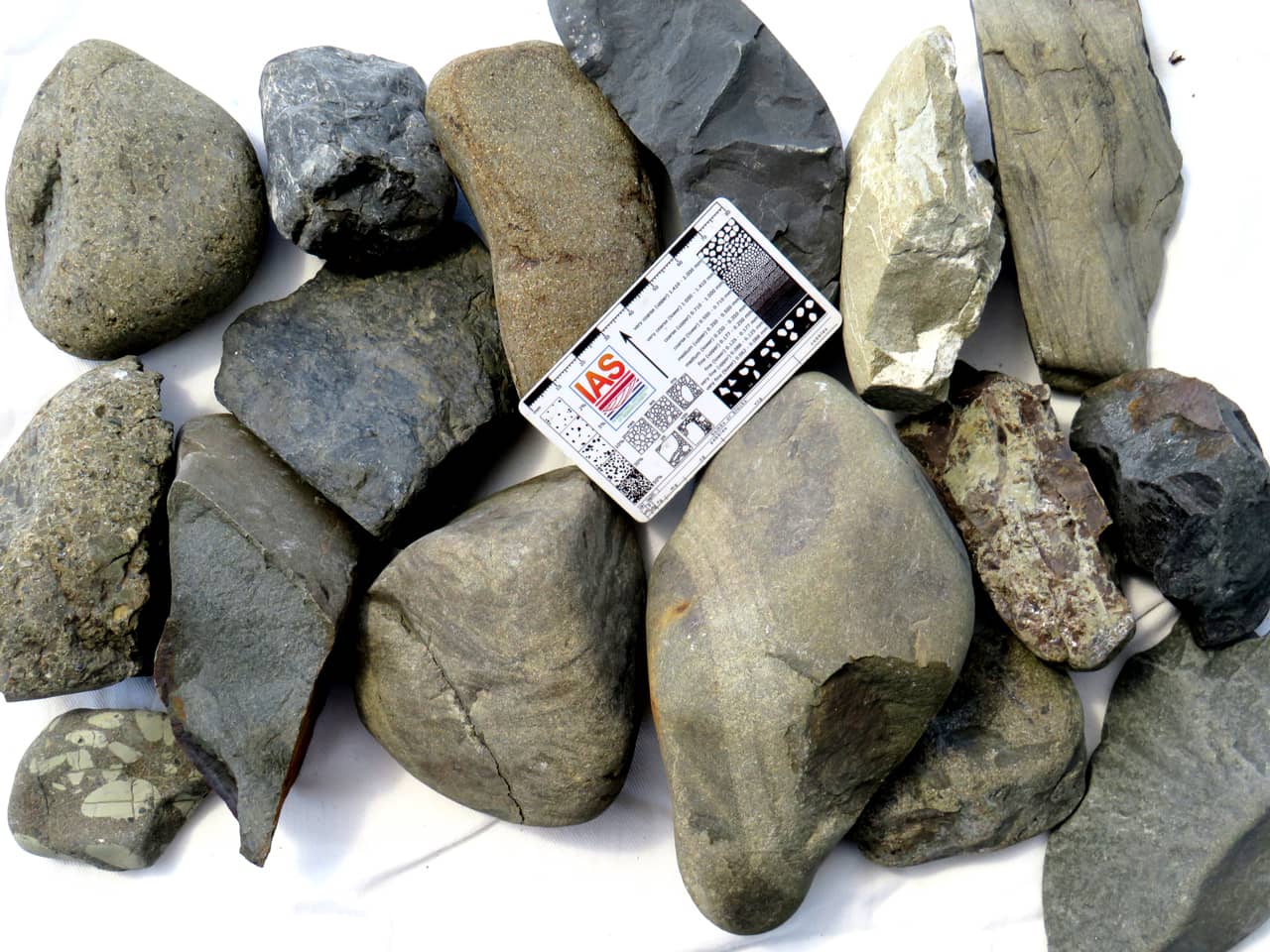
Variety of greywacke gravels (Waioweka Greywacke) typical of major river systems existing of the mountain ranges on both islands.
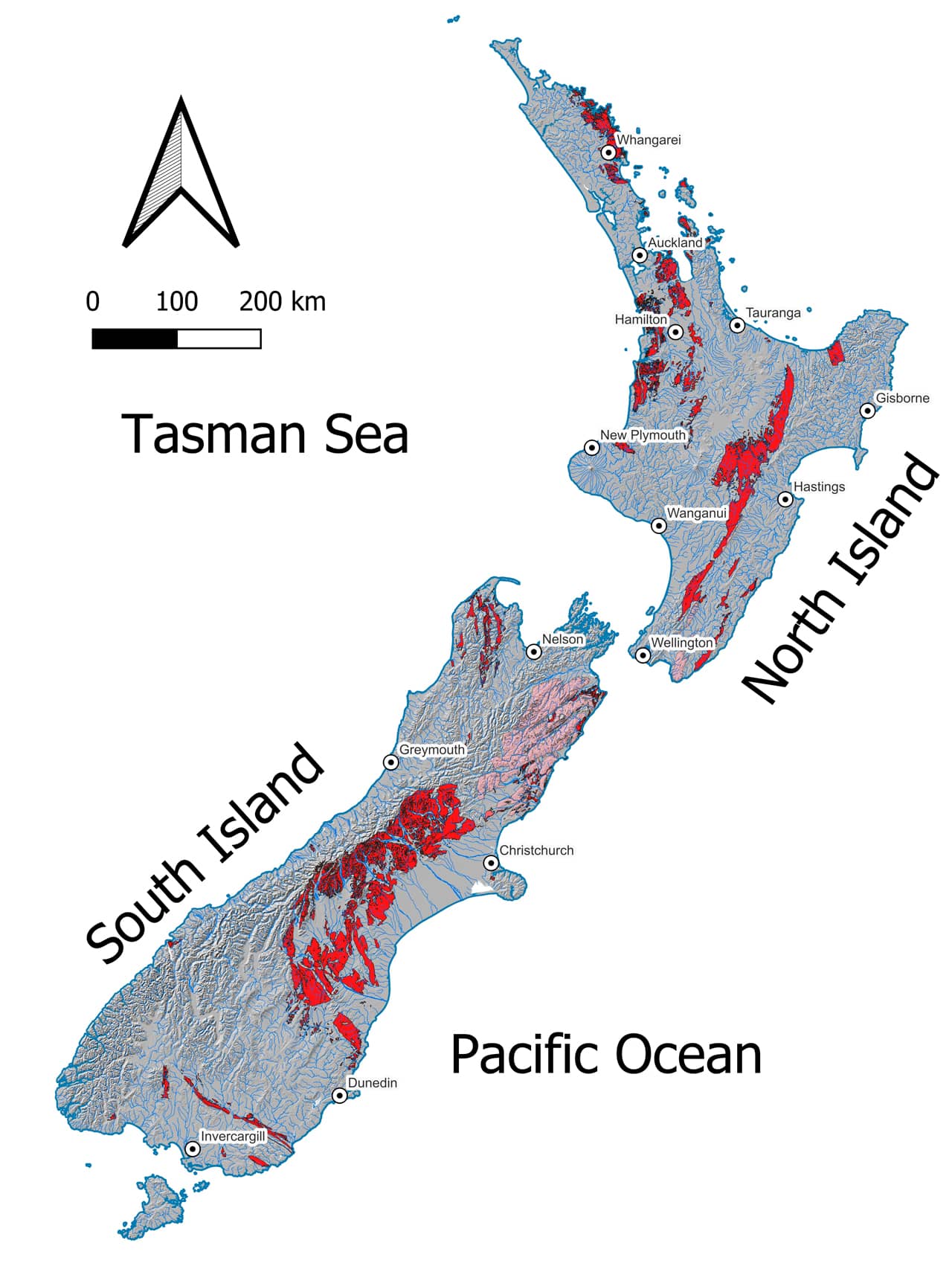
Distribution of greywacke in New Zealand is one of the most prominent hard-rock units (red zones) at the surface (geological information based on the Geological Map of New Zealand, 1:250,000 scale). The pink area is known to contain complex sandstone-siltstone-argillite complexes within greywacke. The shaded relief map in the background and the river data are from the Land Information New Zealand.
Main publication
Mortimer, N., Turnbull, I., Black, P., & Adams, C. (2008). Our national rock. In I. Graham (Ed.), A continent on the move. New Zealand Geosciences into the 21st Century (pp. 88–94). The Geological Society of New Zealand, in association with GNS Science. ISBN-13: 978-1877480003.