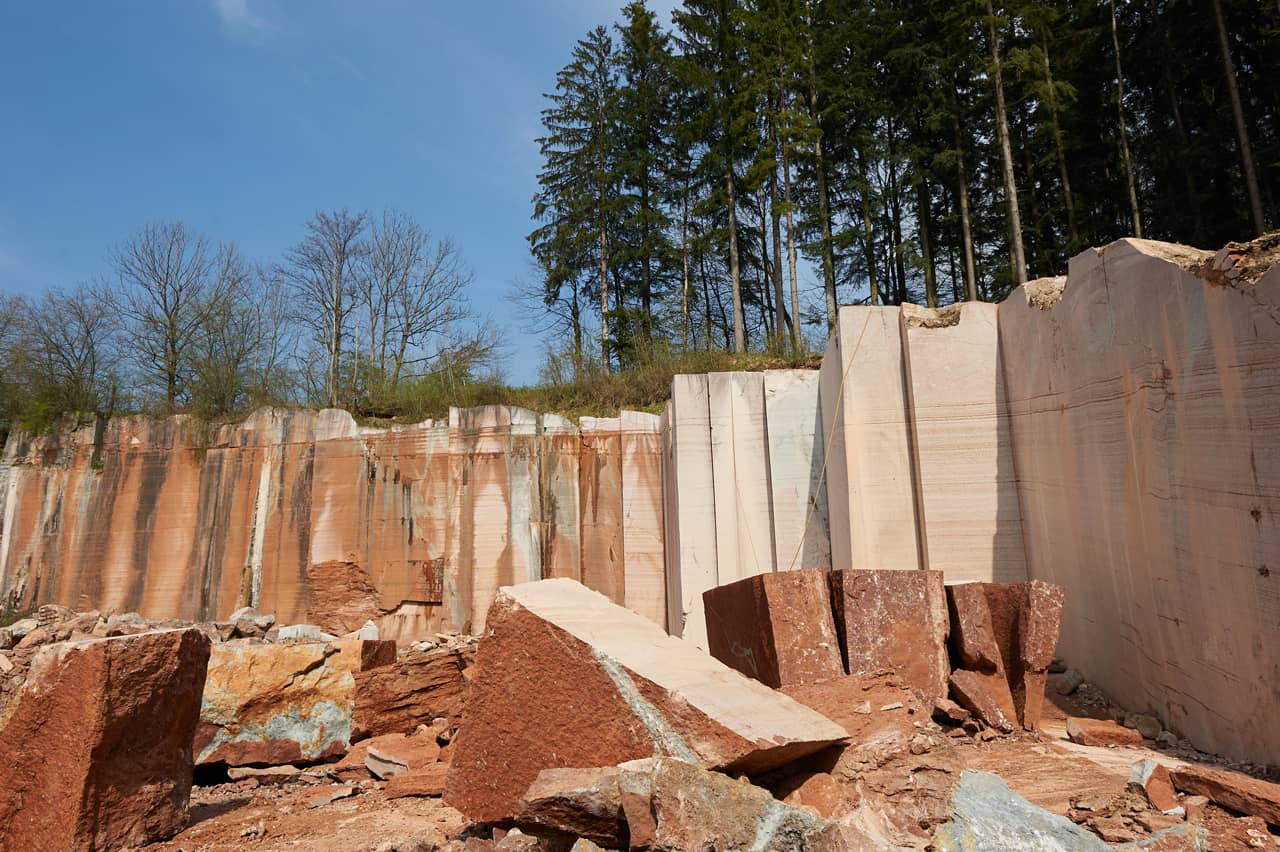
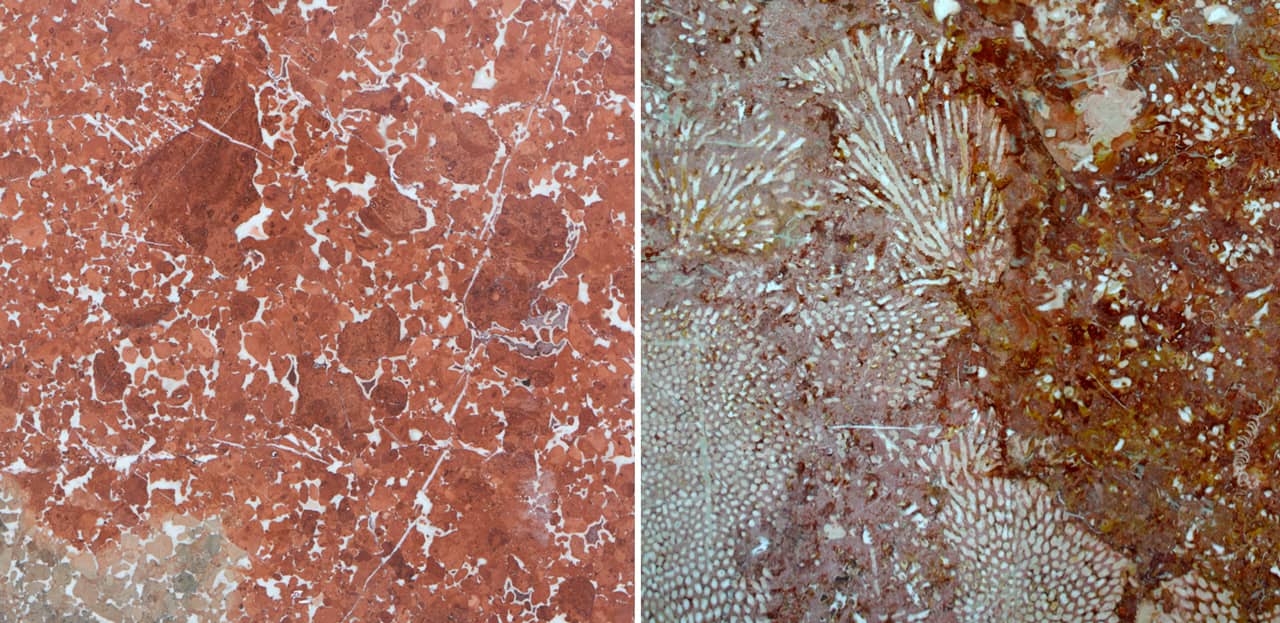
Mostly reddish limestones with some grey to greenish varieties. The lithology includes reef limestones with densely packed fossils, fine-grained red ammonite-rich limestone types (ammonitico rosso) but also red breccias with white cement rims around the components.
Aesthetics
Reef limestone with white, densely packed fossils in grey, green or red matrix; red, fine-grained ammonite limestone with abundant iron-manganese encrustations; breccia without matrix but whitish cement rims around the red components or with fined-grained red matrix.
Geological settings
Mesozoic – Upper Triassic/Lower Jurassic; part of the Northern Calcareous Alps of the Eastern Alps.
Location
ENE of the village Adnet, SSE of the city of Salzburg, Austria.
A multicolored suite of fossil-reach Austrian limestones.
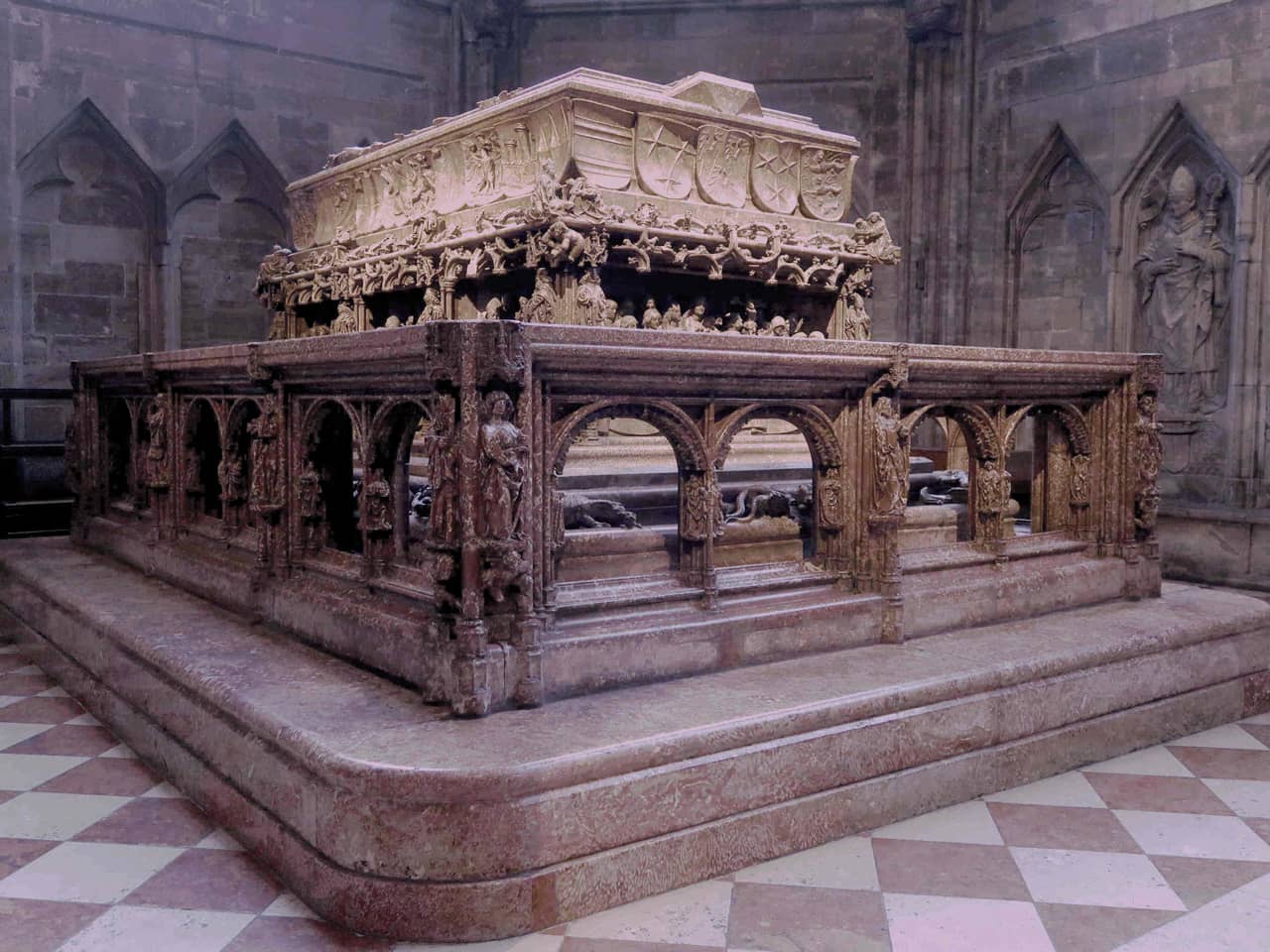
The oldest use of Adnet marble goes back to Roman mosaics, a first major excavation period started around 1000 AD when the Romanesque period required building and decorative stones. Since then, the use of Adnet marbles is documented continuously with heydays in the Gothic, the Renaissance, the Baroque and the Classicistic periods. The diversity in usage of the marble includes wall coverings, floor slabs, portals, door frames, reveals, Marian columns, baptism fonts, altar barriers, holy water fonts, etc. Most importantly gravestones and detailed sculptures are the most valuable artistic products. Best known such examples are the table tomb of the Holy Roman Emperor Frederick III in St. Stephen’s Cathedral of Vienna, a UNESCO World heritage site, and the tomb for the Polish King Casimir IV Jagiello in Krakow (Poland). Adnet Marble has not only been used in Austria and neighboring countries but it was generally popular in Central and Eastern Europe (Austria, Germany, Italy, Czechia, Poland, Hungary, Croatia) as well as in countries oversea (USA, Canada).