Guimarota Jurassic Mammals and Small Vertebrates Collection
Portugal
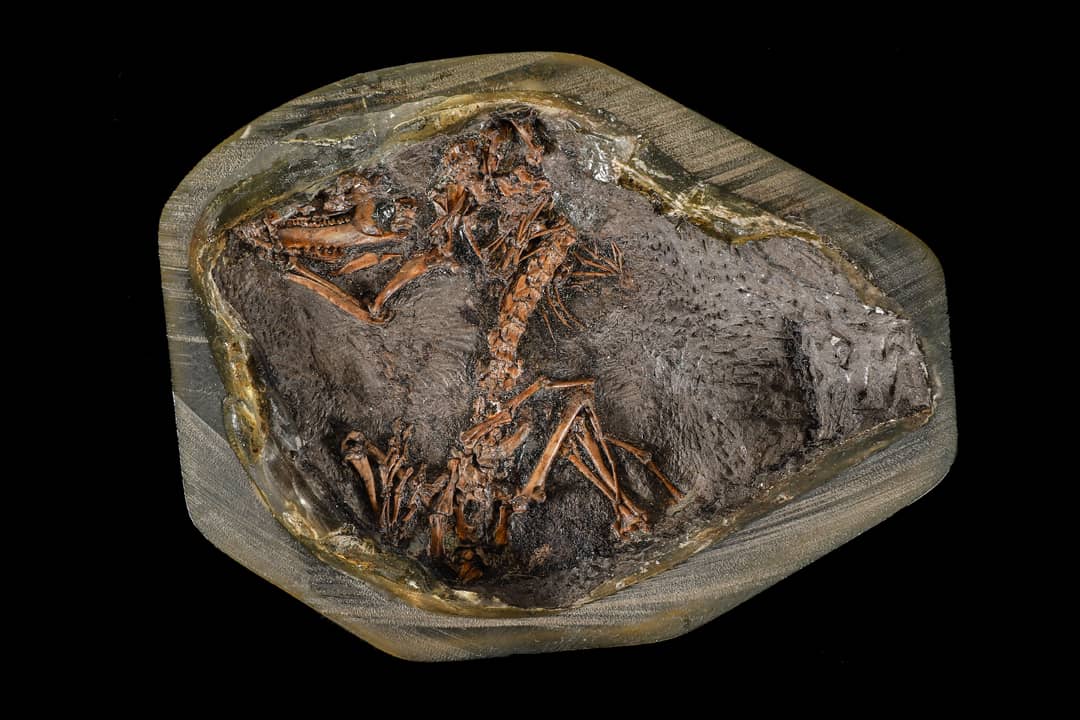
The extraordinary holotype specimen of Henkelotherium guimarotae Krebs, the first complete skeleton of a Mesozoic mammal ever discovered. The specimen is 6 cm long.
Housing institution
Geological Museum
Location
Rua da Academia das Ciências, Nº 19, 2nd Floor, 1249-280 Lisboa, Portugal
The extraordinary holotype specimen of Henkelotherium guimarotae Krebs, the first complete skeleton of a Mesozoic mammal ever discovered. The specimen is 6 cm long.
Arguably the most important fossil collection in the world for providing an insight into the evolution of Late Jurassic mammals.
Geo-collection description
The Guimarota Collection contains tens of thousands of fossils recovered from the disused Guimarota coal mine at Leiria, west-central Portugal. It is housed at the Geological Museum, Lisbon. The museum’s historic 17th-century building, formerly a convent, has since 1857, accommodated the museum of the Geological Survey of Portugal, now the National Laboratory of Energy and Geology (LNEG). The collection began with Walter Kühne of the Freie Universität Berlin, the legendary researcher of Mesozoic mammals. In 1959, while searching for such fossils in Iberia, Kühne turned to Portugal and identified Kimmeridgian deposits at Guimarota as extraordinarily rich in small vertebrate remains. His most notable discovery was that of numerous early mammal fossils [1]. After the mine’s closure in the early 1970s, Guimarota was exploited exclusively for paleontological purposes for nearly a decade. Thanks to the work of Kühne, B. Krebs, T. Martin, S. Henkel, and Portuguese workers, thousands of specimens were collected. These fossils became the basis of an extensive body of research by international teams over the following decades [2,3]. Following publication of major studies, the collection was returned to Portugal in 2007. It now resides permanently in the Geological Museum, serving as a unique record of Late Jurassic biodiversity.
Geo-collection value
The Guimarota mine stands as the most important fossil site for understanding the evolution of early mammals and associated small vertebrates during the Late Jurassic, Kimmeridgian, around 155 million years ago. It yielded an exceptional record of an ancient coastal swamp ecosystem within the Mesozoic Lusitanian Basin [2]. The collection comprises tens of thousands of specimens representing a diversified biota from charophyte algae to representatives of plants such as horsetails, ginkgos and cycads, as well as small invertebrate and vertebrate animals: ostracodes, molluscs, fishes, amphibians, turtles, lizards, snakes, crocodiles, pterosaurs and dinosaurs, including Archaeopteryx [4]. However, its most notable elements are the remarkable fossils of early mammals. Docodonts, multituberculates, dryolestids and henkelotheriids are represented by thousands of teeth, over one thousand jaws, several compressed skulls, and two nearly complete skeletons [3]. The collection includes dozens of holotypes, including the extraordinary Henkelotherium guimarotae Krebs, the first complete skeleton of a Mesozoic mammal ever discovered. [5]. Palaeontologists from all over the world have investigated the Guimarota Collection producing a wealth of scientific information published in numerous prestigious scientific journals worldwide. It is one of Portugal’s most notable palaeontological treasures, raising awareness of geodiversity, and promoting education and public engagement in geoconservation.
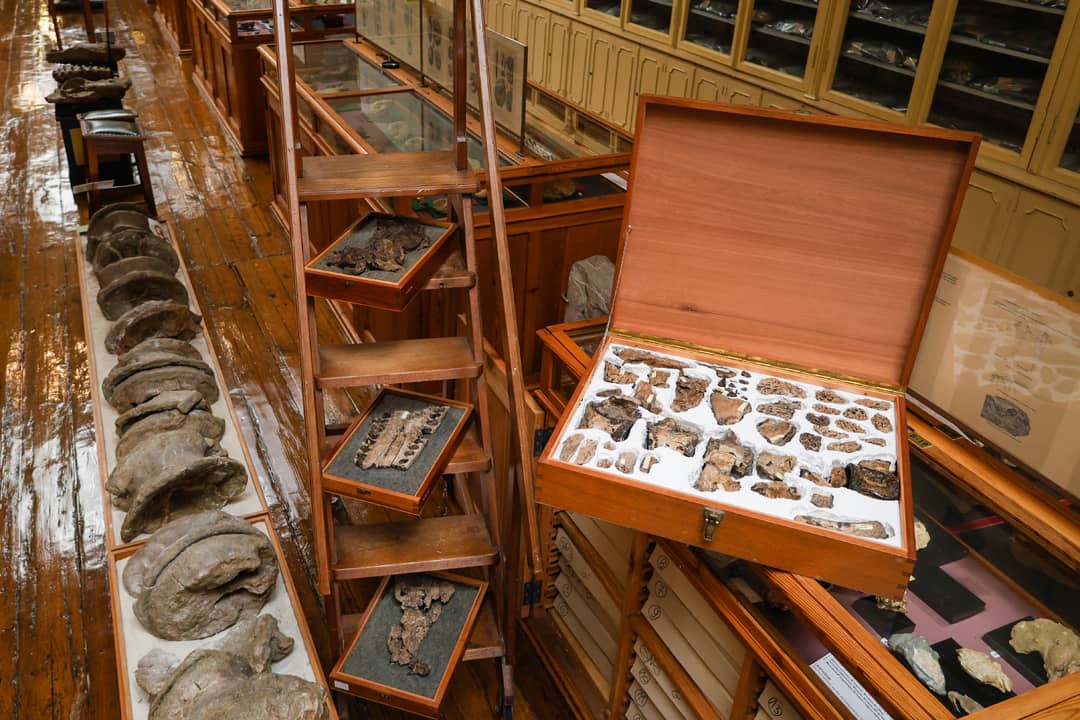
The cabinets and some of the thousands of specimens of the Guimarota Collection, on the right hand of the photo, in the Geological Museum, Lisbon.
Reference
Kühne, W.G. (1961) A mammalian fauna from the Kimmeridgian of Portugal. Nature 192: 274-275.
Martin, T. & Krebs, B. [eds.] (2000) Guimarota. A Jurassic Ecosystem. Verlag Dr. Friedrich Pfeil, München, 155 pp.
Newham, E., Corfe, I. J., Brewer, P., Bright, J. A., Fernandez, V., Gostling, N. J., … & Martin, T. (2024) The origins of mammal growth patterns during the Jurassic mammalian radiation. Science advances, 10(32): eado4555.
Caldwell, M. W., Nydam, R. L., Palci, A. & Apesteguía, S. (2015) The oldest known snakes from the Middle Jurassic-Lower Cretaceous provide insights on snake evolution. Nature Communications, 6(1): 5996.
Krebs, B. (1991) Das Skelett von Henkelotherium guimarotae gen. et sp. nov. (Eupantotheria, Mammalia) aus dem Oberen Jura von Portugal. Berliner geowissenschaften Abhandlungen, A, 133: 1-110.