This collection is an invaluable record of the rich Neogene history of Türkiye, showing how its landscapes changed over time.
Geo-collection description
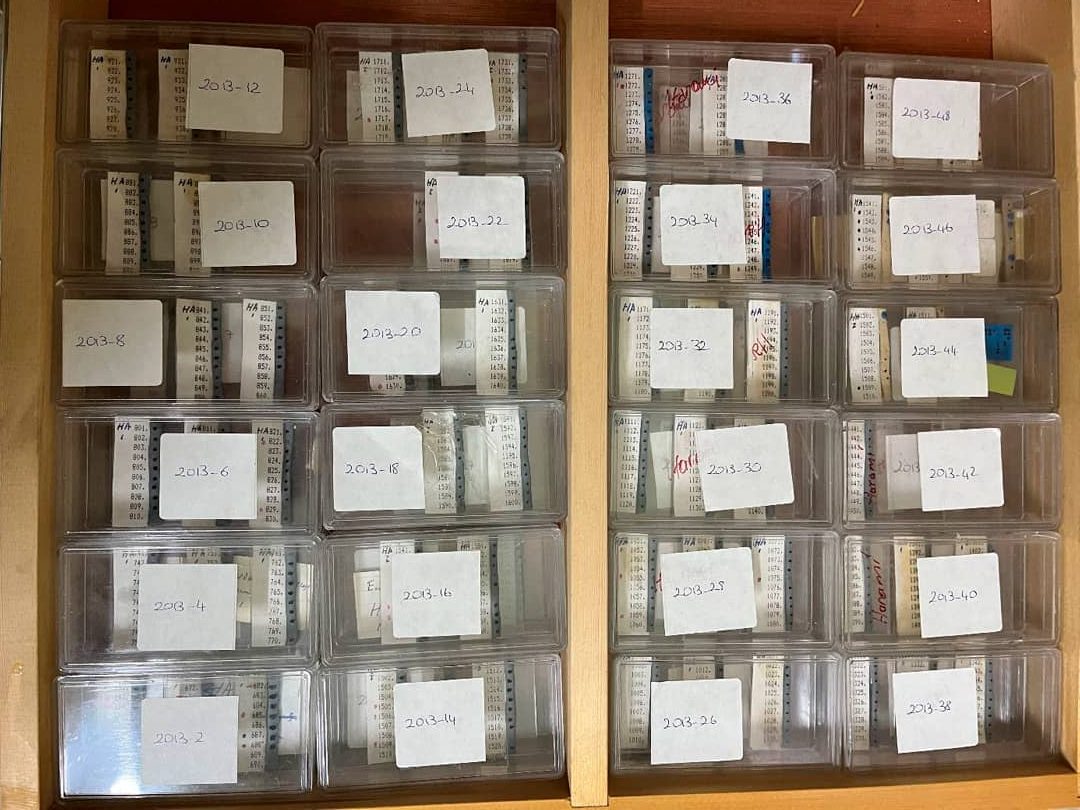
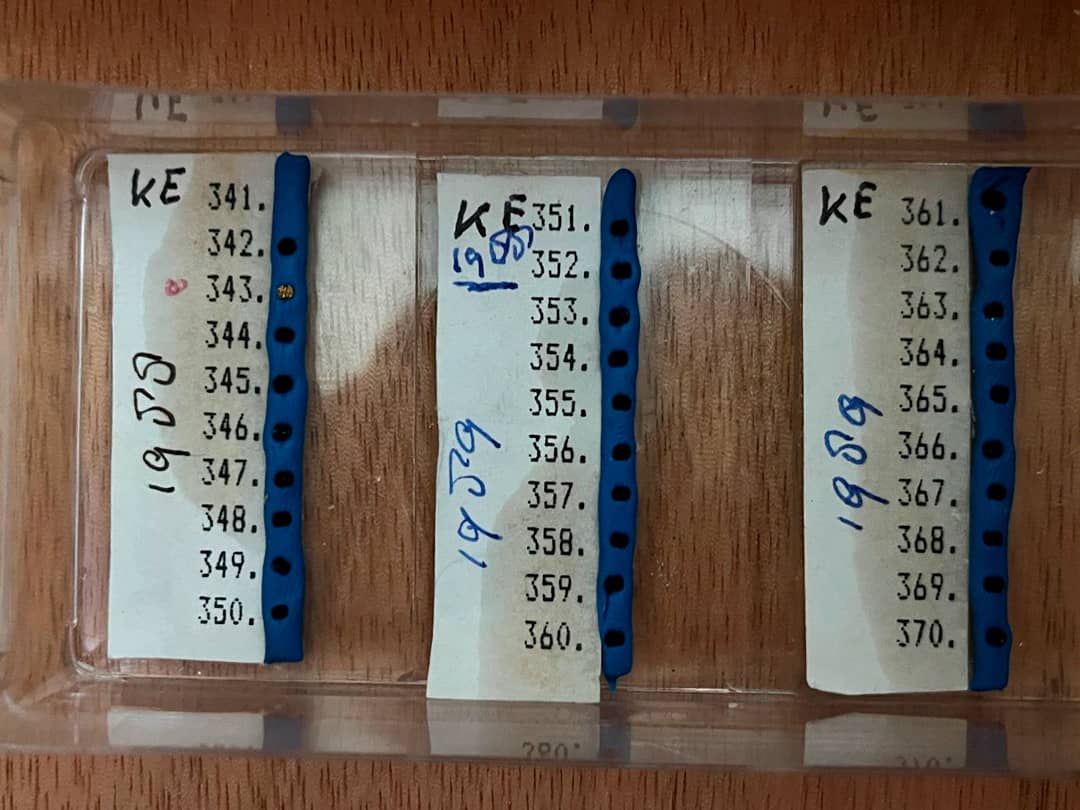
The collection consists of isolated teeth and some jaws of micromammals. The material was obtained through wet-screening, a process in which fossiliferous sediments are washed over a series of sieves, after which the fossils are hand-picked under a microscope. The fossils are mounted in plasticine on glass plates, allowing them to be numbered individually. The glass plates are stored in plastic boxes, with a maximum of 30 mounted teeth per box. The boxes are organized according to their locality. The dozens of localities that make up the collection cover the entire Neogene history of Türkiye, but some Pleistocene and Oligocene localities are also represented. Sample size per locality differs markedly: localities known only from a test sample may be represented by as few as five molars, whereas the intensely studied faunas, such as Harami, contain hundreds of fossils.
Geo-collection value
The collection is the result of decades of collaboration between Turkish palaeontologists Engin Ünay and Gerçek Saraç, and Hans de Bruijn, a leading specialist in fossil micromammals. It covers the entire Neogene history of Anatolia and provides a crucial biochronological framework for the terrestrial deposits of Türkiye. In addition to offering the most reliable age estimates for numerous Neogene lake deposits, micromammals also serve as important indicators of palaeoenvironmental conditions. Accordingly, the collection documents environmental changes through time, with a particular emphasis on the Early Miocene, when Anatolia was largely isolated. Extensive assemblages have been recovered from localities such as Harami and Keseköy. The collection constitutes a key reference point for scholars studying the Neogene history of Anatolia. It contains numerous type specimens of rodents and insectivores that have been described, and substantial portions of the material have already been published in international journals. As research on the fossil record of Anatolian micromammals continues—by both local scholars and international specialists—the collection remains central to the (inter)national scientific community.
Each fossil is fixed on plasticine, numbered and protected in a plastic box.
Reference
Bosma, A.A., De Bruijn, H. & Wessels, W. (2019) Early and middle Miocene Sciuridae (Mammalia, Rodentia) from Anatolia, Turkey, Journal of Vertebrate Paleontology, e1537281. DOI: 10.1080/02724634.2018.1537281.
Ünay, E., Atabey E. & Saraç. G. (2001). Small mammals and Foraminifera from the Anatolian (Central Taurus) Early Miocene. Annals of Carnegie Museum 70 (4): 247–256.
Ünay, E. & De Bruijn, H. (1984). On some Neogene rodent assemblages from both sides of the Dardanelles, Turkey. Newletters on Stratigraphy 13(3): 119-132.
De Bruijn, H., Ünay, E., Saraç. G. & Klein Hofmeijer, G. (1987). An unusual new eucricetodontine from the Lower Miocene of the Eastern Mediterranean. Proceedings van de Koninklijke Akademie der Wetenschappen B 90 (2): 119-132.
Van den Hoek Ostende, L.W. (2001). Insectivore faunas from the Lower Miocene of Anatolia. Part 7: The Kargi assemblages. Scripta Geologica, 122: 83-99.