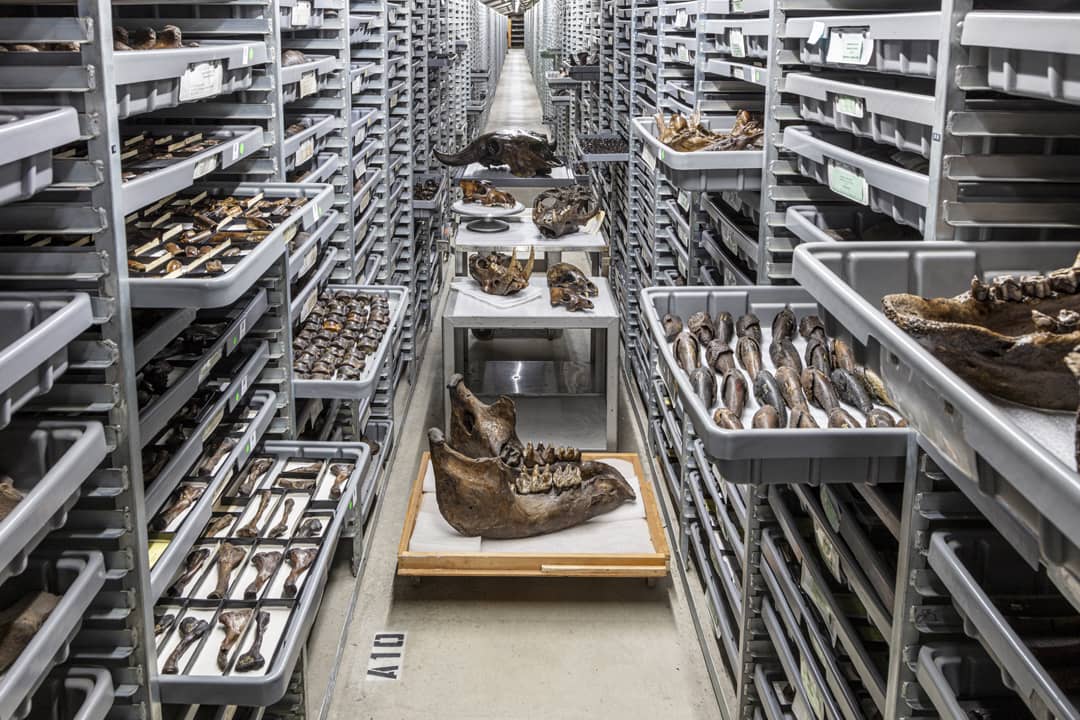
The Rancho La Brea collection is the world’s most abundant, comprehensive, and well-preserved record of terrestrial Pleistocene life.
The world’s largest, richest, and most exquisitely-preserved collection of terrestrial Pleistocene fossils, giving unparallelled insight into Ice Age life.
Geo-collection description
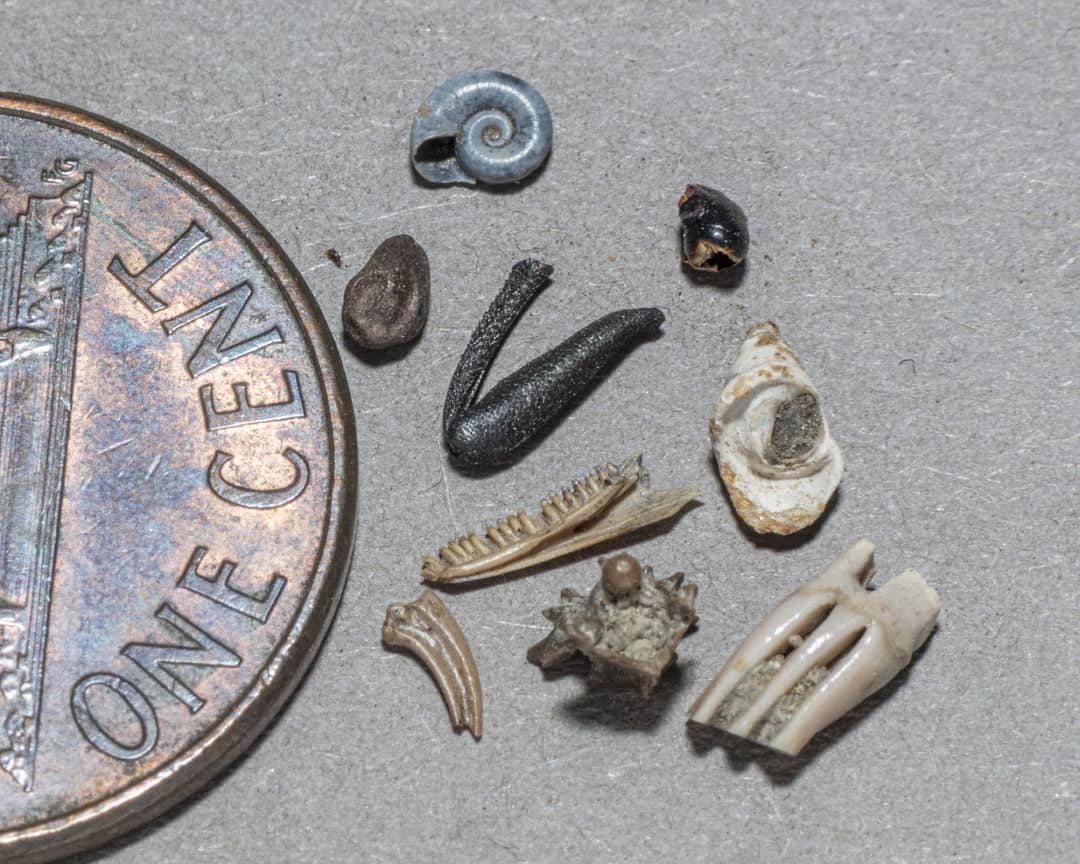
The collection comprises several million terminal-Pleistocene through Holocene plant and animal fossils excavated from the asphaltic deposits at Rancho La Brea, known colloquially as the “La Brea Tar Pits.” These include the osseous remains of dozens of species of extinct, Pleistocene large mammals and birds as well as of extant large carnivores and ungulates, rodents and lagomorphs, mesocarnivores, bats, raptors, passerine birds, snakes, lizards, turtles, amphibians, and fish; chitinous material from more than 100 species of insects and terrestrial arthropods including ants, spiders, millipedes, and extinct dung beetles; shells of freshwater mollusks; and plant material encompassing seeds, leaves, cones, roots, branches, and trunks. Most fossils are not permineralized, meaning that the original organic tissue is preserved, allowing geochemical analyses. The vast majority of specimens that have been subjected to radiocarbon analysis have yielded dates within the past 57,000 years.
Archaeological material includes artifacts from the early Holocene through historic period; domesticated animals; and one early-Holocene human skeleton.
The specimens in this collection were excavated by La Brea Tar Pits’ parent institution, the Natural History Museum of Los Angeles County, beginning at its founding in 1913. Ongoing excavations and local mitigation projects continue to grow the collection every year.
Geo-collection value
The Rancho La Brea collection comprises more than 3.5 million fossils representing over 600 species of plants, vertebrates, and invertebrates, allowing scientists to reconstruct an ecosystem in exceptional detail and track its trajectory across 60,000 years, investigating climatic and anthropogenic impacts. The abundance of certain megafaunal species, numbering in the hundreds, and sometimes thousands of individuals, has facilitated studies on biology, behavior, adaptation and extinction that are usually impossible in the fossil record. The preservation of organic remains in most specimens allows geochemical and molecular analyses such as radiocarbon dating, stable isotope analysis, and paleoproteomics. In fact, Rancho La Brea specimens were used in the development of the radiocarbon dating methodology.
Widely recognized as the world’s richest Pleistocene paleontological assemblage, it is the type locality of the Rancholabrean North American Land Mammal Age (NALMA), an IUGS Geological Heritage Site, and a U.S. National Natural Landmark. Located in a public park in urban Los Angeles, the museum hosts 400,000 visitors/year, including 40,000 schoolchildren, and the collection is extensively used by researchers; fossils from this collection have been the subject of nearly 900 publications. The site is also a cultural icon, having been featured in more than 50 films and television shows.
In addition to the iconic megafauna, the collection represents hundreds of species of plants, small vertebrates, mollusks and terrestrial arthropods.
Stock, C. & Harris, J.M., 1992. Rancho La Brea: A Record of Pleistocene Life in California. Los Angeles County Museum of Natural History, Los Angeles, CA.
Marcus, L.F., Berger, R., 1984. The significance of radiocarbon dates for Rancho La Brea. In Martin, P.S. & Klein, R.G., Quaternary extinctions: a prehistoric revolution, pp.159-183.
Howard, H., 1962. A comparison of (prehistoric) avian assemblages from individual pits at Rancho La Brea, California. Los Angeles County Museum of Natural History Contributions in Science, 58, 1-24.
Merriam, J. C. & Stock, C. 1932. The Felidae of Rancho La Brea. [TYPE: Felis bituminosa sp. nov.; Smilodon californicus brevipes ssp. nov.]. Carnegie Institution of Washington Publication #422. Washington, D. C.: Carnegie Institution of Washington.