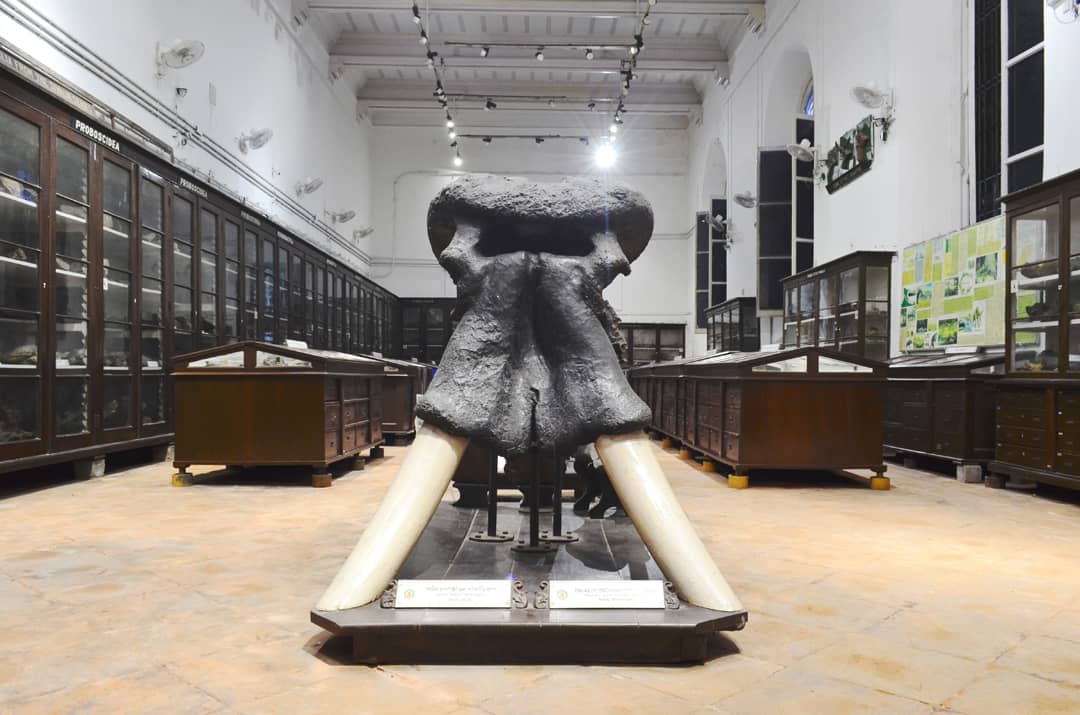
The skull of Palaeoloxodon namadicus (Pilgrim, 1905) from late Pleistocene of Central India- Siwalik gallery, Indian Museum.
Geo-collection description
The Siwalik Gallery of the Geological Survey of India (GSI), housed in the Indian Museum, Kolkata, preserves one of the most comprehensive and scientifically significant collections of vertebrate fossils from the Siwalik Group in South Asia. The assemblage represents material from a wide range of provenances, including Sind, Punjab, Kutch, the Narmada Valley, Piram Island, the Bugti Hills, and other fossiliferous localities across India and present-day Myanmar. Today, the collection comprises nearly 1,400 specimens, dating from the Miocene to the Pleistocene (~18–0.5 million years ago), acquired through extensive GSI fieldwork, institutional transfers, and inter-museum exchanges. A cornerstone of this collection originated from the Asiatic Society of Bengal (ASB), transferred to the Indian Museum in 1875. It included some of the earliest Siwalik fossils discovered during the 1830s. The collection was significantly enriched by systematic fieldwork of William Theobald, Deputy Superintendent of GSI, who between 1873 and 1881 gathered important material from Miocene and Pliocene successions in the Potwar Plateau, Chandigarh, and Pinjore. Further contributions were made by W. T. Blanford and F. Fedden, notably from Sindh and Kutch. Between 1878 and 1881, cast exchanges with the British Museum added further depth. Collectively, these specimens highlight the gallery’s enduring significance for vertebrate paleontology, evolutionary research, and the reconstruction of South Asia’s deep-time geological history.
Geo-collection value
The Siwalik fossil mammal collection housed in the Indian Museum represents one of the most scientifically and historically significant vertebrate repositories in Asia. Systematically assembled since the early nineteenth century, it played a central role in shaping debates on Earth’s deep history and vertebrate evolution. Its scientific value lies in the pioneering work of Dr. Hugh Falconer and Sir Proby Cautley [1,2], who first described iconic taxa such as Sivapithecus and Stegodon, as well as in Richard Lydekker’s 1885 catalogue [4], which provided a lasting taxonomic and curatorial framework. Together, these efforts established the Siwalik fossils as a foundation for studies on Miocene–Pleistocene mammalian diversification, extinction, biochronology, faunal dispersal, and primate evolution.
The collection also holds immense historical and cultural value, having been transferred from the Asiatic Society of Bengal in 1875 and subsequently enriched by William Theobald’s Geological Survey of India expeditions [3], along with contributions by W. T. Blanford and others. These specimens were critical in the birth of vertebrate paleontology in South Asia, documenting extinct Proboscideans and Rhinocerotids that reshaped 19th-century natural history. Finally, the Siwalik collection has enduring educational value, serving as a primary archive for South Asian prehistory and a reference point for training researchers, curators, and students in evolutionary and paleontological sciences.
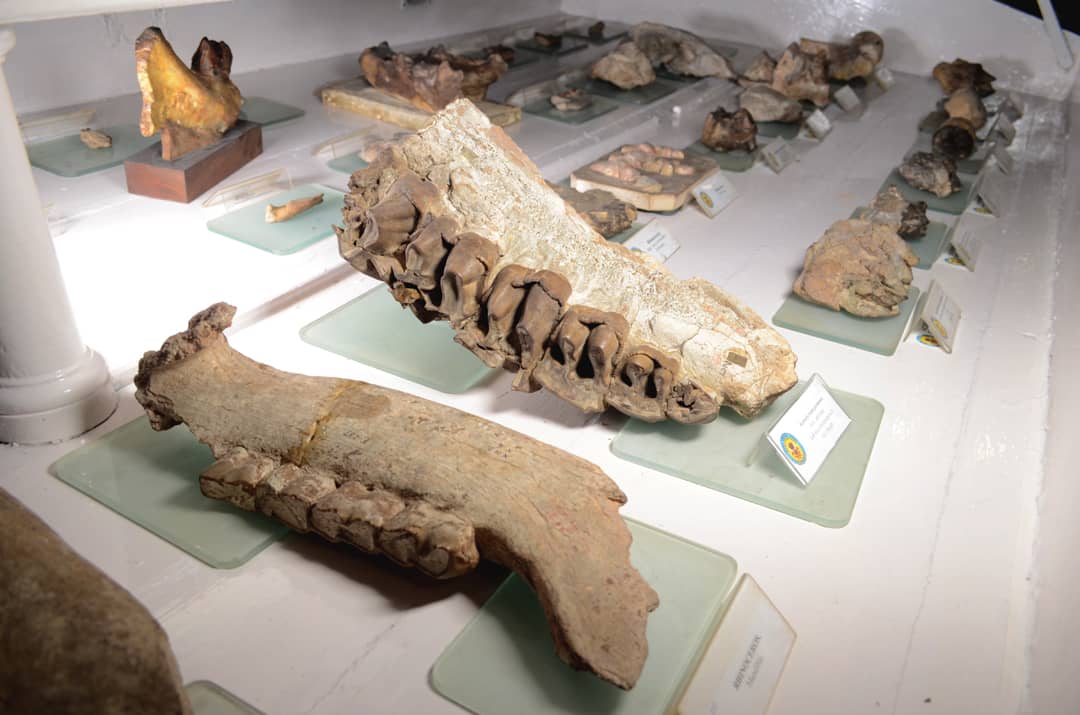
Siwalik Rhinocerotidae: mandibles, maxillae, and postcranial elements from nineteenth-century collections.
Reference
Falconer, H., & Cautley, P. T. (1846–1849). Fauna antiqua Sivalensis: Being the fossil zoology of the Sewalik Hills, in the north of India. London: Smith, Elder.
Falconer, H. and H. Walker. 1859. Descriptive Catalogue of the Fossil Remains of Vertebrata from The Siwalik Hills, The Nerbudda, Perim Island, & c. in the Museum of the Asiatic Society of Bengal. C. B. Lewis, Baptist Mission Press, Calcutta.
Theobald, W. 1881. The Siwalik group of the sub-Himalayan region. Records of the Geological Survey of India 14:66-121.
Lydekker, R. 1885. Catalogue of the Remains of Siwalik Vertebrata Contained in the Geological Department of the Indian Museum, Calcutta. Government Printing, India.
Pilgrim, G. E. 1905. On the occurrence of Elephas antiquus (namadicus) in the Godavari alluvium, with remarks on the species, its distribution and the age of the associated Indian deposits. Records of the Geological Survey of India 32:199-218.