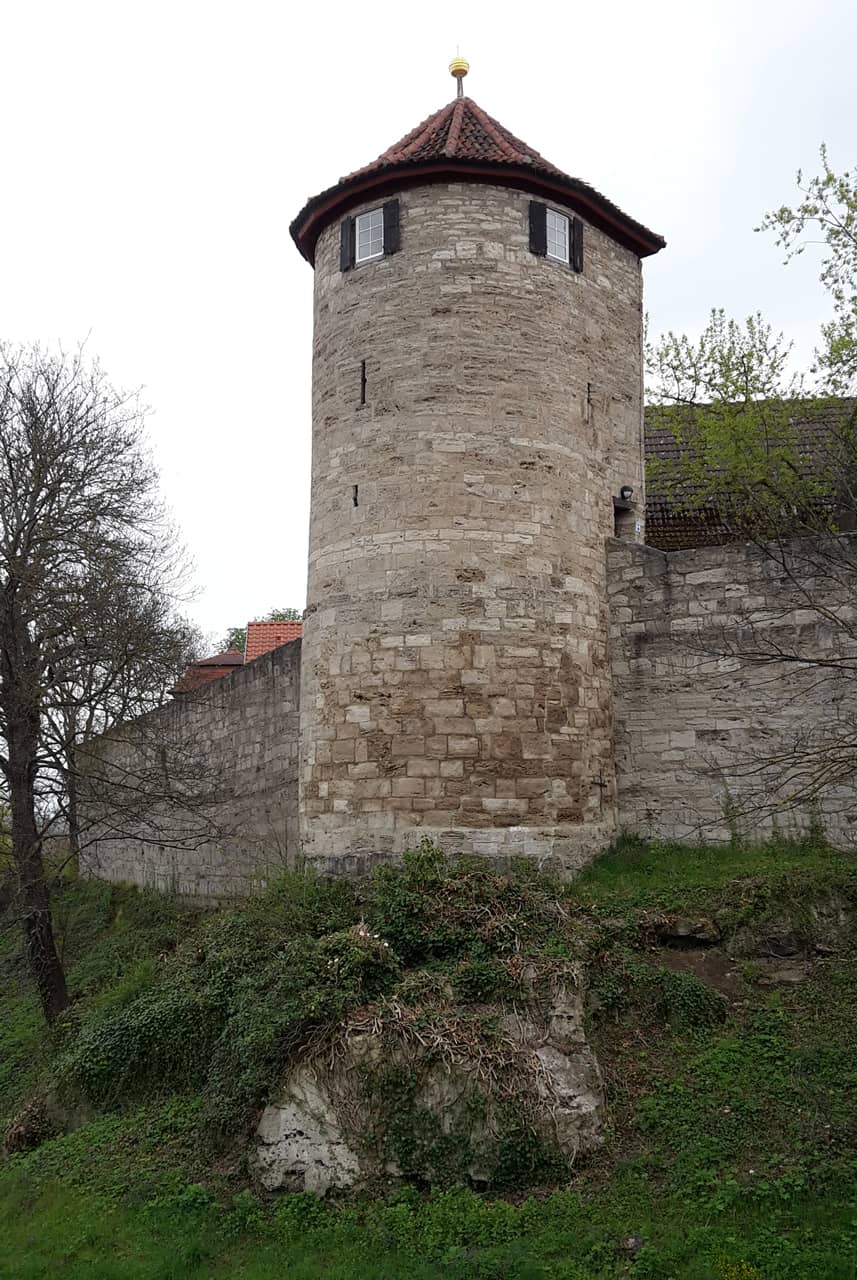
Early 13th-century city wall tower on travertine rock in Mühlhausen.
Local native name
Thüringer Travertin
Year designation
2026
Lithology
Limestone – travertine, all lithotypes. High-purity calcite (up to 98%) containing 1–2% gypsum and dolomite and discolored to varying degrees by limonite.
Aesthetics
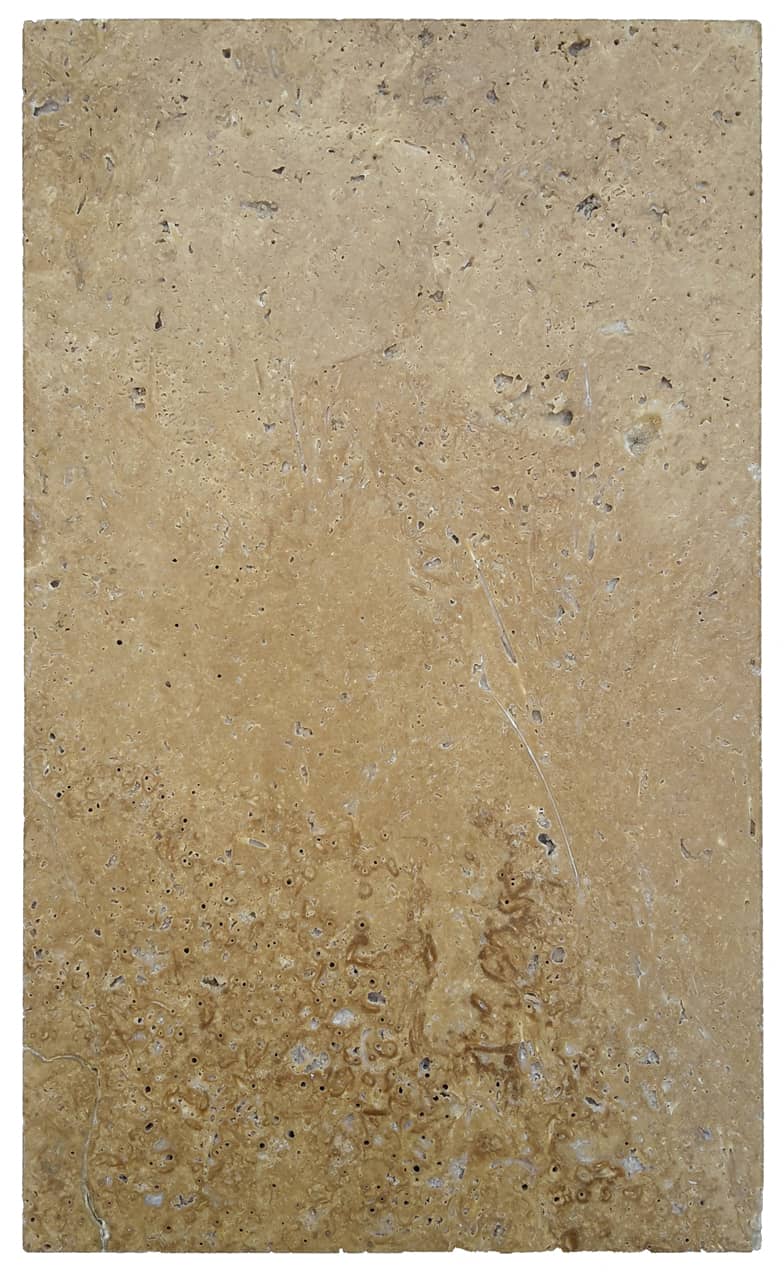
Creamy white through ochre yellow to light brown; its color and texture resemble cork.
Geological settings
Quaternary; precipitation from cold karst water.
Location
Various parts of the Thuringian Basin in the state of Thuringia, central Germany.
Early 13th-century city wall tower on travertine rock in Mühlhausen.
Thuringian travertine – stone of life
In the late Stone Age, Thuringian travertine was used to erect menhirs (megalithic culture). In the Middle Ages, actual quarrying began in many quarries. At its most important deposits, entire medieval towns were built from it, with town walls, churches, foundation walls, and even rock cellars hewn into the natural travertine bedrock.
Sample slab of Thuringian travertine (Langensalza travertine), polished, 50×30 cm, from Bad Langensalza, TRACO – Deutsche Travertin Werke.
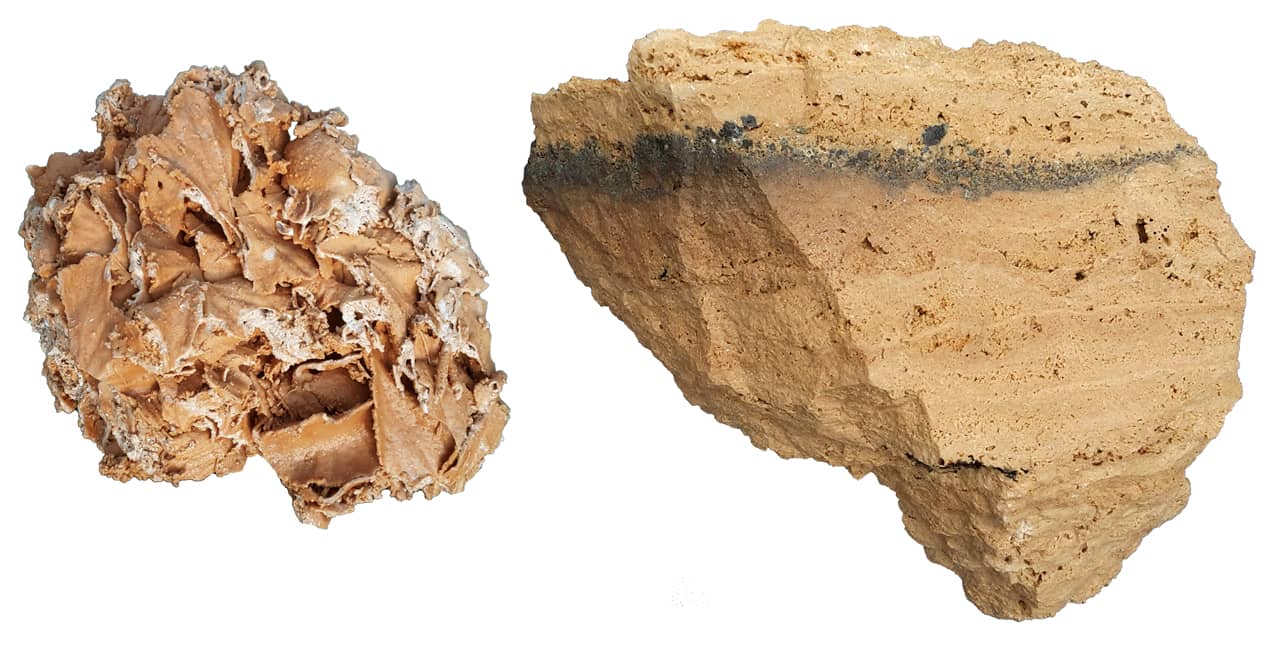
(Left) Piece of travertine composed almost entirely of encrusted leaves and stems of the marsh marigold (Caltha palustris), width 20 cm, from Bad Langensalza.
(Right) Piece of travertine with an Eemian-interglacial fire-stained coating (campfire of prehistoric humans), width 30 cm, from Burgtonna.