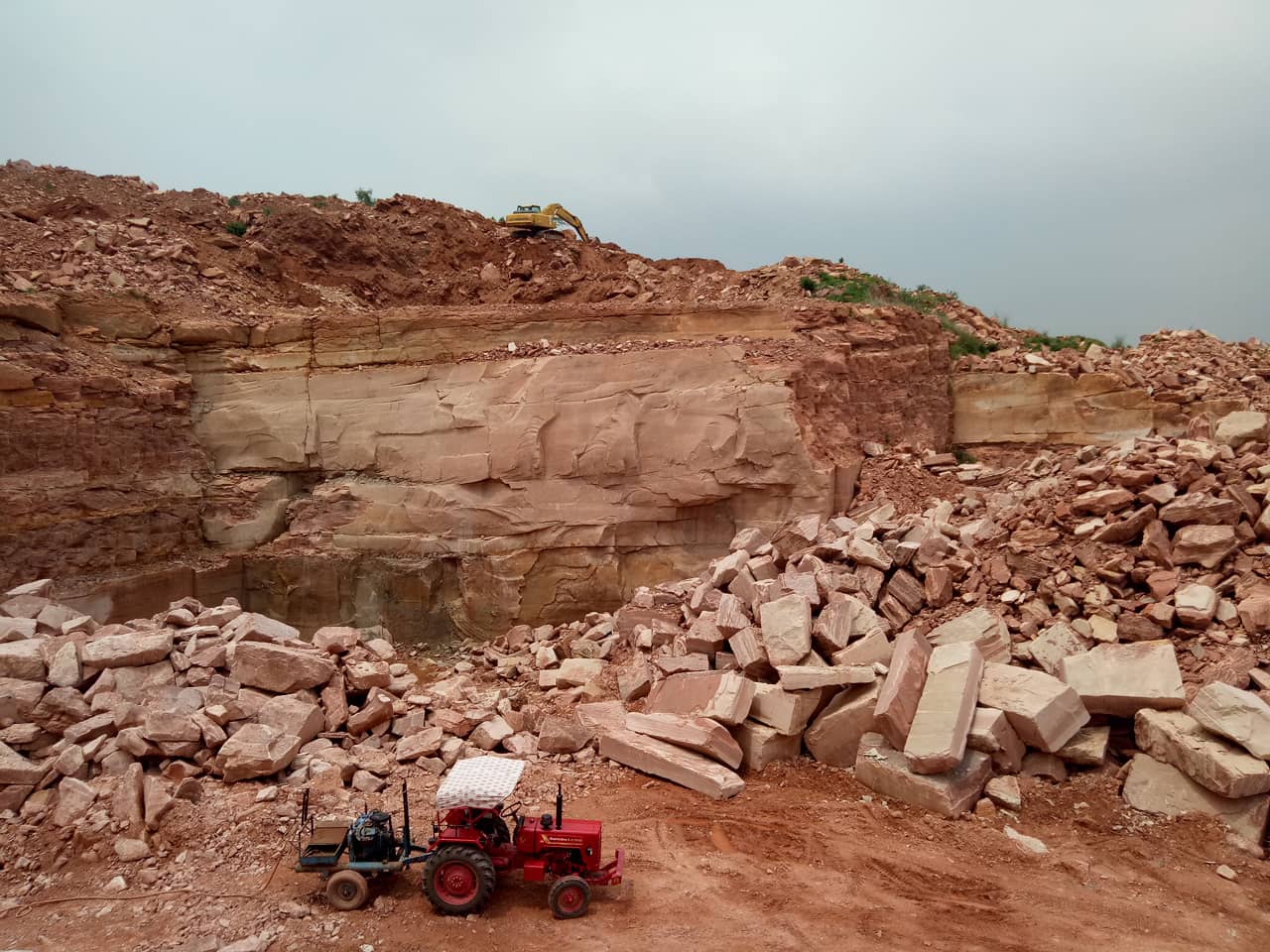
In Vindhyan Basin exposed in parts of Rajasthan, Madhya Pradesh, Uttar Pradesh and Jharkhand states.
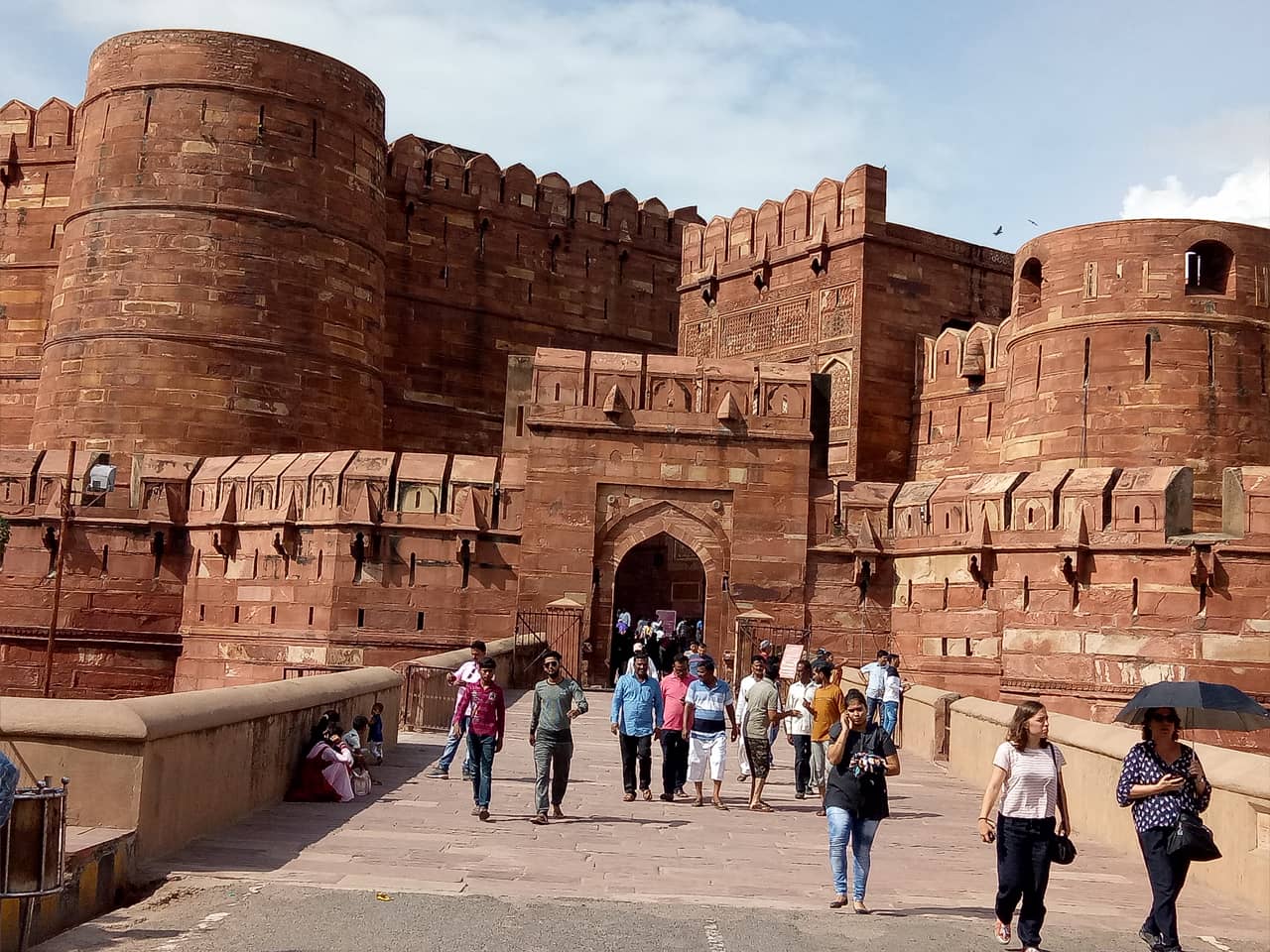
Red Fort, Agra.
A Crowning Glory of Architectonic Heritage from India.
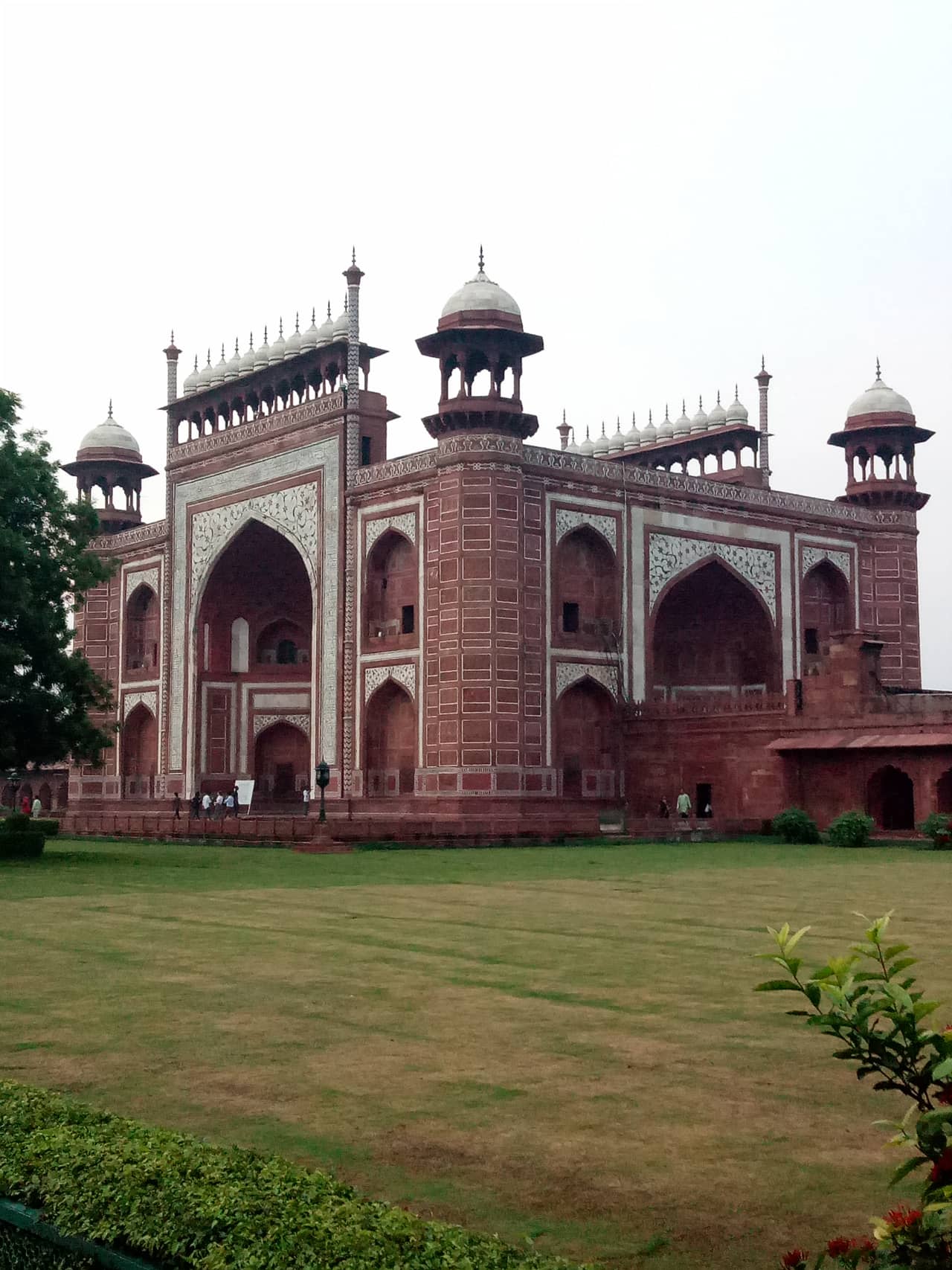
Vindhyan sandstone has played a major role in shaping the architectural and cultural identity of India. The earliest evidence of its use by prehistoric communities for habitation is recorded at the cave shelters of Bhimbetka. Over time, this durable and workable stone became central to monumental architecture in central and northern India. Important heritage structures such as the Sanchi Stupa and the temples of Khajuraho demonstrate the early use of Vindhyan sandstone. Rajput rulers widely used this stone in forts and palaces across eastern Rajasthan. Iconic structures such as Chittorgarh Fort, Bundi Fort, and Jal Mahal highlight the material’s suitability for intricate carvings, jali screens, and decorative motifs. Its use continued during the Delhi Sultanate and Mughal periods in structures such as Qutub Minar, Humayun’s Tomb, Red fort of Agra and Delhi, Taj Mahal and Fatehpur Sikri. The extensive use of Vindhyan sandstone supported quarrying, craftsmanship, and regional trade networks. Even during British rule, buildings such as Rashtrapati Bhavan, Parliament House, and India Gate continued this tradition. Thus, Vindhyan sandstone not only shaped India’s architectural heritage but also contributed significantly to local economies, skilled craftsmanship, and the preservation of cultural identity across centuries.
South Gate to enter Taj Mahal.
Vindhyan Sandstone quarry at Bansi Paharpur, Rajasthan.
Main publication
Kaur, G., Singh, S., Kaur, P., Garg, S., Fareeduddin, Pandit, M.K., Agrawal, P., Acharya, K. and Ahuja, A., 2019. Vindhyan Sandstone: a crowning glory of architectonic heritage from India. Geoheritage, 11(4), pp.1771-1783.