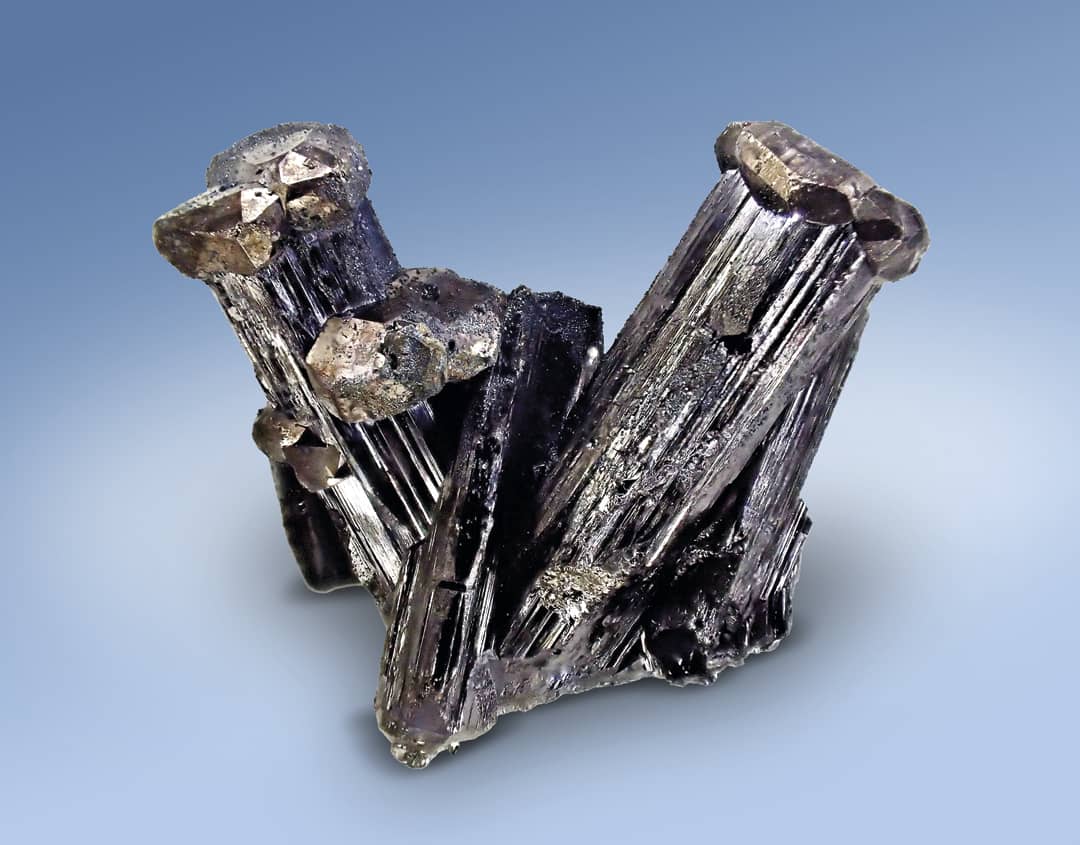
Colusite on terminated enargite (2 centimeters). Named by Landon and Mogilnor (1933) after the type locality, the East Colusa Mine. (photo: D. Evanich).
Cretaceous
Mineralogy
Igneous and Metamorphic petrology
Butte, Montana, United States of America
46°1’12” N, 112°30’00” W
Colusite on terminated enargite (2 centimeters). Named by Landon and Mogilnor (1933) after the type locality, the East Colusa Mine. (photo: D. Evanich).
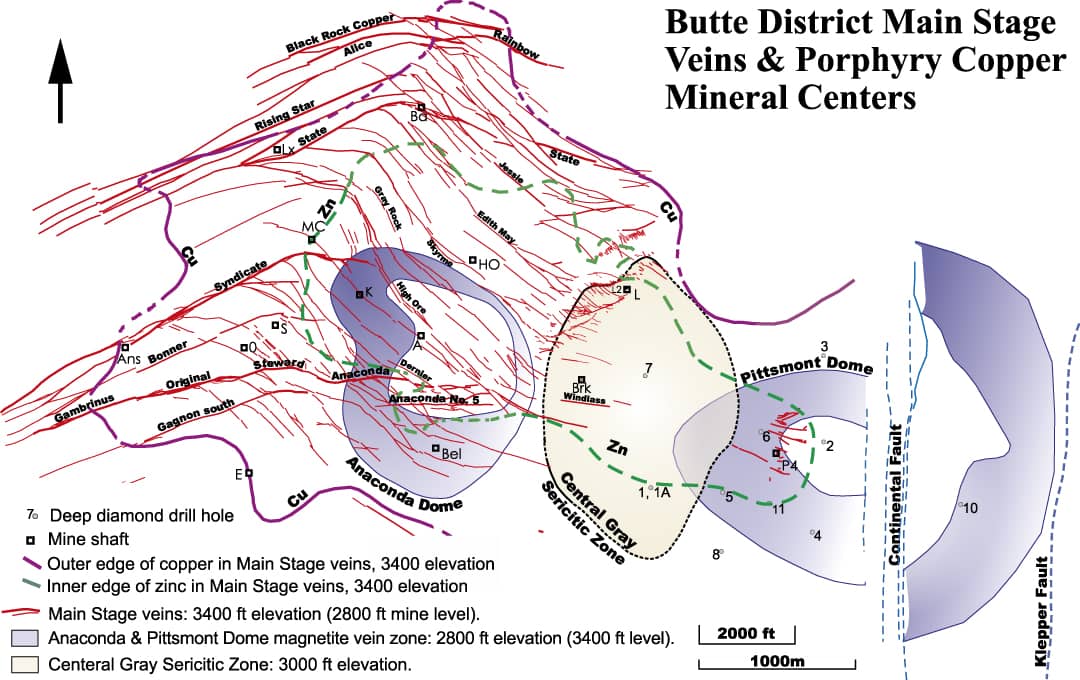
The geology and general description of the ore deposit at Butte was first described by Weed in 1897; the zoned nature of the ore was first described by Reno Sales in 1914 who recognized a central zone of copper, an intermediate zone of copper/zinc, and a peripheral zone of zinc/manganese/silver. Likewise, Sales and Meyer (1948) established the use of zoned hydrothermal alteration types ranging from potassic to argillic to support exploration in Butte as well as deposits world wide. Butte yielded many outstanding examples of crystalline ore such as covellite, chalcocite, bornite, digenite, enargite, galena, and unique minerals like colusite.
The Butte Mining District was established in 1864 following the discovery of gold placers in Missoula and Dublin Gulches and along Silver Bow Creek (Miller, 1978). It hosts one of the world’s largest zoned porphyry molybdenum-copper systems, characterized by extensive hydrothermal alteration and a diverse mineral assemblage containing copper, molybdenum, zinc, manganese, lead, silver, gold, and numerous critical minerals. Between 1881 and 2022, mining of this mineralized system produced more than 12 million tons of copper, 2.5 million tons of zinc, and 2 million tons of other base metals, along with nearly 23,000 tons of silver and 100 tons of gold.
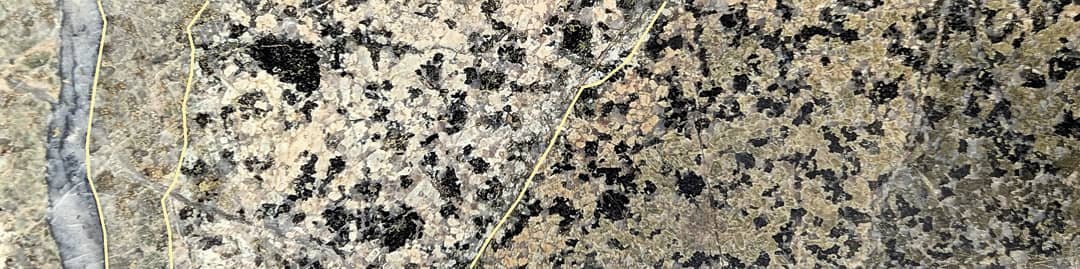
The ore body is hosted by the 75.6 Ma Boulder Batholith, which intruded Precambrian through Cretaceous country rocks (Reed and Dilles, 2020). Mineralization occurs within an extensive vein network that extends more than 3,700 meters laterally and 400 meters deep. Hydrothermal veins range from 1.5 to 15 meters thick (Czehura, 2006) and have alteration halos that display distinctive mineral assemblages and zonation. Significant resources remain, including more than 363 million tons of reserves containing critical mineral commodities and a large base-metal rich supergene enrichment zone with a reserve of 500 million tons at 0.48% Cu.
Cessation of underground mining and the Berkeley Pit with no plan for reclamation prompted establishment of the largest Federal Superfund site in the US. In the 35 years since, the Butte District has become nationally recognized for innovations in large-scale, hydrogeochemical evaluations, soil/water reclamation, and metals recovery technology.
Czehura, S. (2006) “Butte: A world class ore deposit,” Mining Engineering, 58, pp. 14–19.
Duaime, T., Kennelly, P. and Thale, P. (2004) Butte, Montana, richest hill on earth: 100 years of underground mining. Montana Bureau of Mines and Geology (Montana Bureau of Mines and Geology Miscellaneous Contribution, 19, 1 sheet, scale 1:9,000).
Landon, R.E. and Mogilnor, A.H. (1933) “Colusite, a new mineral of the sphalerite group,” American Mineralogist, 18(12), pp. 528–533.
Miller, R.N. (1978) “Production history of the Butte District and geological function, past and present,” Guidebook for the Butte Field Meeting of Society of Economic Geologists, Aug. 18-21, 1973. Second printing [expanded]. Butte, Montana: Anaconda Co.
Reed, M. and Dilles, J. (2020) “Ore deposits of Butte, Montana,” in J.J. Metesh and C.H. Gammons (eds.) Geology of Montana. Montana Bureau of Mines and Geology (Special Topics: Montana Bureau of Mines and Geology Special Publication, 122), p. 41.
Sales, R.H. and Meyer, C. (1948) “Wall alteration at Butte. Montana,” AIME Transactions, 178, pp. 9–35.
Weed, W.H. (1897) “Description of the Butte Special District,” in U.S. Geological Survey (ed.) Geologic Atlas of the United States. (Butte Folio, 38), pp. 1–3.
John Metesh.
Montana Bureau of Mines and Geology, Montana Technological University