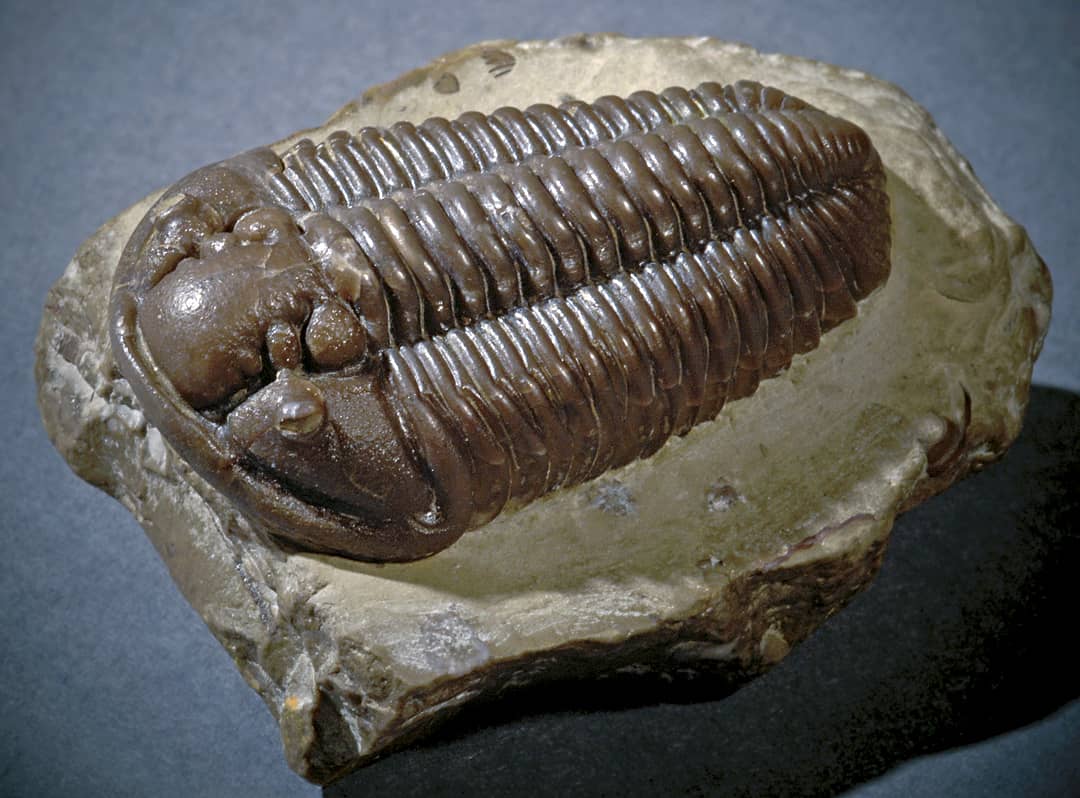
The trilobite ‘Calymene blumenbachii’, known locally as the Dudley Bug, illustrating the superb preservation which characterises fossils from Wren’s Nest.
Geological Period
Silurian (Wenlock)
Main geological interest
Paleontology
Stratigraphy and sedimentology
Location
The English Midlands, United Kingdom
52°31’33” N, 2°05’38” W
The trilobite ‘Calymene blumenbachii’, known locally as the Dudley Bug, illustrating the superb preservation which characterises fossils from Wren’s Nest.
An exceptionally abundant, diverse and well preserved shallow marine invertebrate fauna, world famous for its trilobites.
For over 200 years, Wren’s Nest has been the source of a rich, diverse and exceptionally well preserved Silurian lagerstätte fossil fauna. Over 600 species, with almost 200 having it as their type locality, are recorded. Superb museum collections exist in the UK and internationally reflecting a long history of internationally important palaeontological and stratigraphical research. Wren’s Nest is especially known for its trilobites, with Calymene blumenbachii, widely known as the ‘Dudley Bug’, enjoying cultural status alongside its palaeontological importance. The site remains extremely fossiliferous, publicly accessible and widely used for research, education and public engagement.
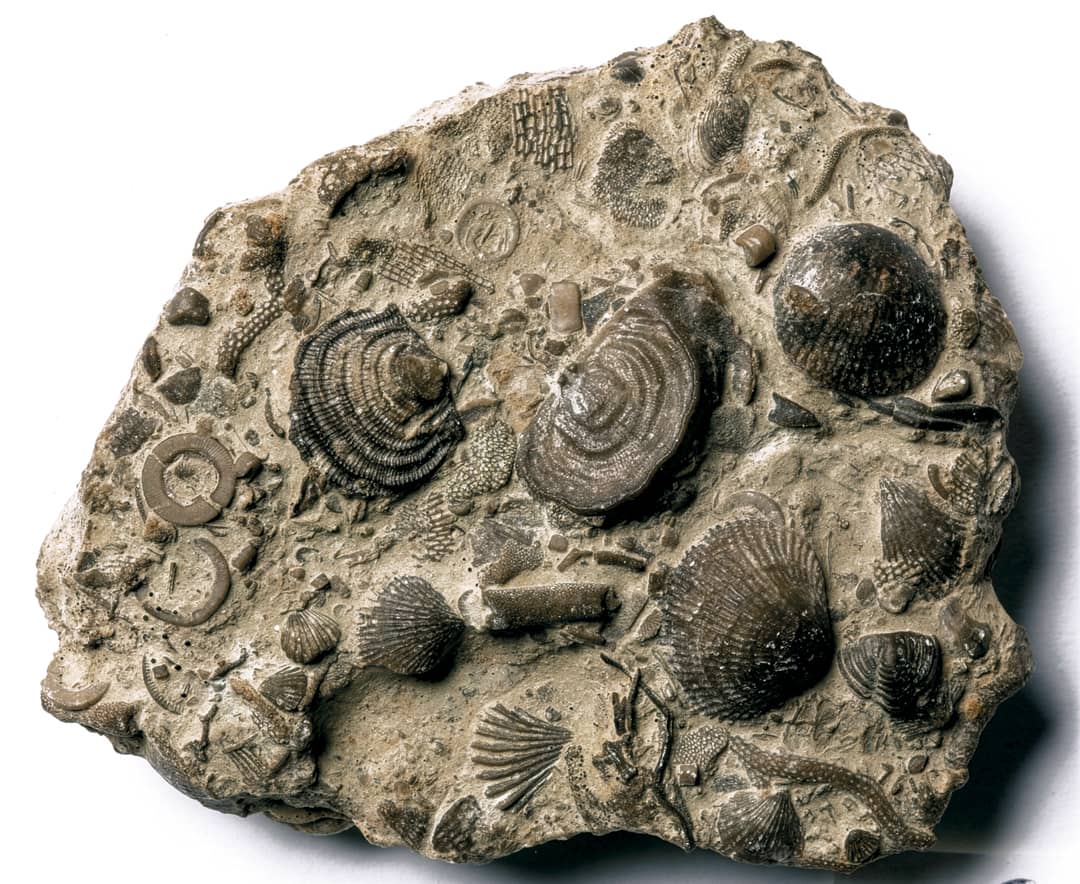
A typical bedding-plane faunal assemblage including brachiopods, bryozoa, crinoids and trilobites illustrating the abundance, diversity and preservation of the fossils at Wren’s Nest.
Geological description
The disused quarries of Wren’s Nest National Nature Reserve expose a sequence of Silurian shallow marine limestones and in situ. fossil reefs. The site is of outstanding palaeontological importance for rocks of Wenlock age, having a worldwide reputation since the 18th century for the abundance, diversity and exceptional preservation of marine invertebrates, both macro- and microfossils. Fossils from the Wren’s Nest have been widely figured and discussed; more than 600 species have been identified, and it is the type locality for almost 200 species. The fauna includes brachiopods, stromatoporoids, bryozoans, corals, crinoids, cystoids, trilobites, gastropods, ostracods, polychaete worms, and conodonts (Aldridge et al., 2000). Major UK museums boast superb collections from the site, and numerous museums internationally also house collections. Many specimens from Wren’s Nest are illustrated in ‘The Silurian System’ (Murchison, 1839) and the site played an important role informing this pioneering work that established the Silurian System. Wren’s Nest is perhaps best known for its exquisitely preserved trilobites, notably Calymene blumenbachii, which became the mascot of the limestone miners and is celebrated by local people from Dudley and included in the town’s coat-of-arms (Mikulic and Kluessendorf, 2007).
Scientific research and tradition
Wren’s Nest has a long, extremely important research history in which many fossil groups were described and their use in stratigraphic interpretation established. Key research ranges from Murchison’s The Silurian System (1839) to Ray and Thomas’s work on skeletal preservation and sequence stratigraphy (2007) and Cramer et al. (2012) on dating the Wenlock Series.
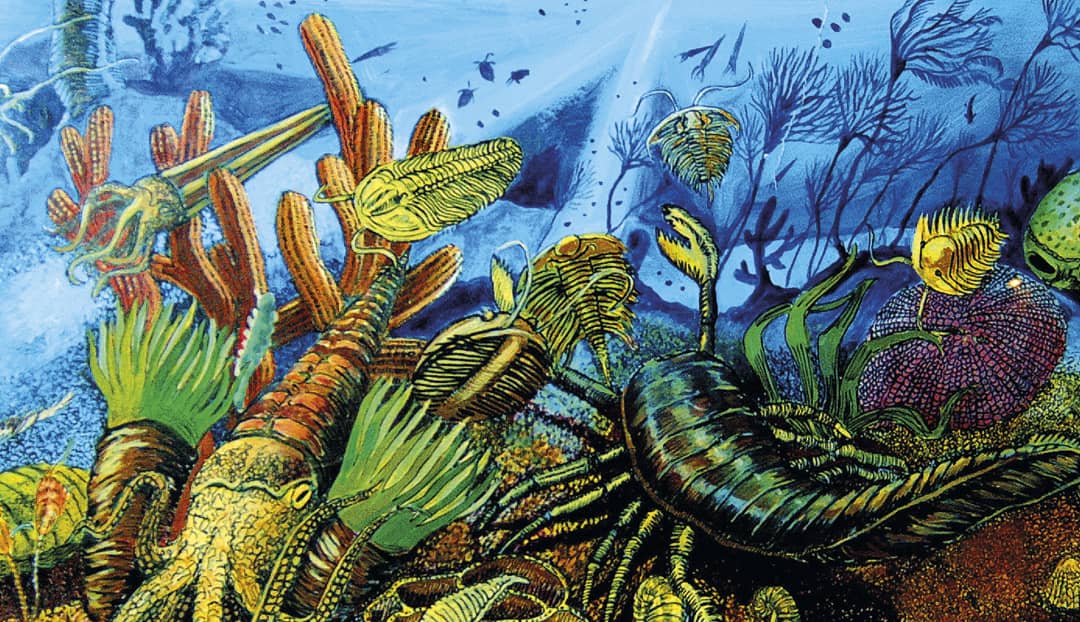
Artist’s impression of the Silurian sea-floor based on the fossil assemblage recorded from Wren’s Nest.
Reference
Aldridge, R.J. et al. (2000) British Silurian Stratigraphy. Peterborough: Joint Nature Conservation Committee (Geological Conservation Review Series, 19).
Cramer, B.D. et al. (2012) “U-Pb (zircon) age constraints on the timing and duration of Wenlock (Silurian) paleocommunity collapse and recovery during the ‘Big Crisis,’” Geological Society of America Bulletin, 124(11–12), pp. 1841–1857. Available at: https://doi.org/10.1130/B30642.1.
Mikulic, D.G. and Kluessendorf, J. (2007) “Legacy of the locust – Dudley and its famous trilobite Calymene blumembachii,” in D.G. Mikulic, E. Landing, and J. Kluessendorf (eds.) Fabulous Fossils. 300 years of Worldwide Research on Trilobites. Albany: New York State Museum, pp. 141–169.
Murchison, S.R.I. (1839) The Silurian System, founded on geological researches in the counties of Salop, Hereford, Radnor, Montgomery, Caermarthen, Brecon, Pembroke, Monmouth, Gloucester, Worcester, and Stafford: with descriptions of the coalfields and overlying formations. London: John Murray. Available at: https://archive.org/details/siluriansystemw00murcgoog/mode/2up.
Ray, D.C. and Thomas, A.T. (2007) “Carbonate depositional environments, sequence stratigraphy and exceptional skeletal preservation in the much Wenlock Limestone Formation (silurian) of Dudley, England,” Palaeontology, 50, pp. 197–222. Available at: https://doi.org/10.1111/j.1475-4983.2006.00607.x.
Author(s)
Colin Prosser.
The Geologists’ Association, UK
Richard Fortey (†).
Natural History Museum, London, UK (deceased 2025)
Paul Smith.
Oxford University Museum of Natural History, Oxford, UK
Graham Worton.
Dudley Museum and Black Country UNESCO Global Geopark, UK